PPC, or Pay Per Click, is a popular advertising model where businesses pay each time someone clicks on one of their ads. It’s an effective way to drive traffic to your website without waiting for organic results. Most commonly associated with Google PPC ads, this form of digital marketing helps businesses appear at the top of search results based on keywords they choose to target. PPC campaigns are structured with specific goals in mind, whether it’s generating leads, increasing sales, or building brand awareness. From Google and Bing to social media platforms like Facebook, PPC advertising provides flexible opportunities to connect with your audience wherever they are.
The Benefits of PPC Advertising
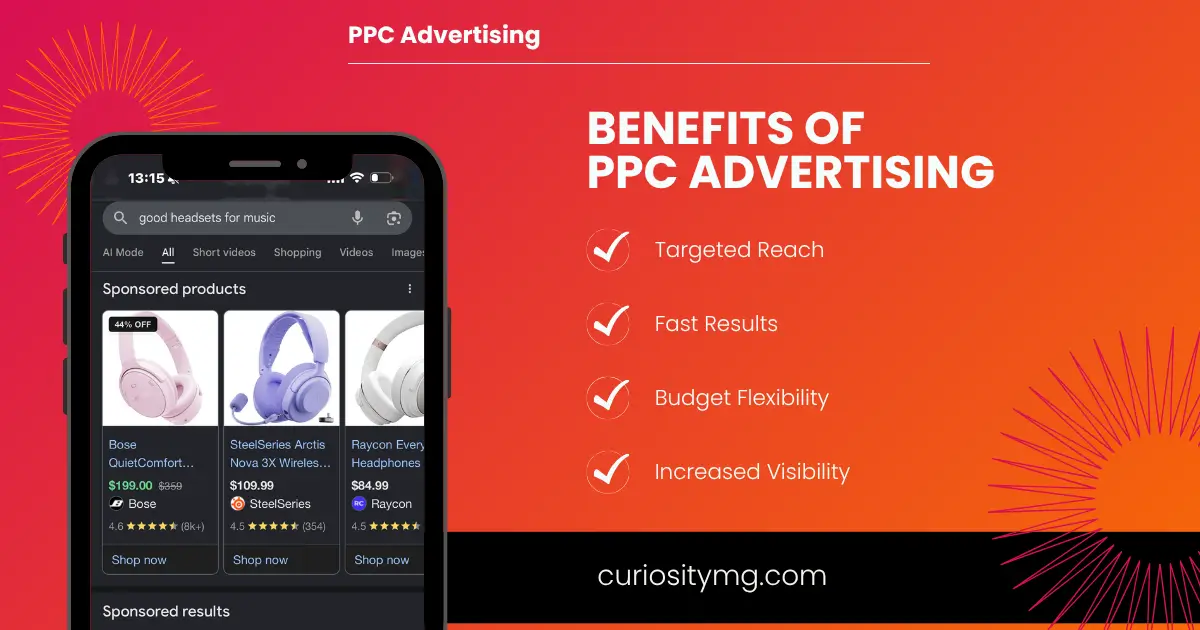
Targeted Reach PPC allows you to zero in on your ideal audience. Through audience segmentation and geo-targeting, you can ensure your ads reach the right people at the right time.
Fast Results Unlike organic SEO, PPC delivers quicker visibility, giving your business an immediate boost on search engines.
Budget Flexibility Whether you’re a small business or a large corporation, PPC offers budget flexibility. You control your spending and adjust as you go, with varying options for Google PPC prices.
Increased Visibility PPC puts your business at the forefront of search results, helping you capture more attention and clicks, regardless of how competitive your industry is.
Is PPC a Good Fit for Your Business?
Not sure if PPC aligns with your business goals? Take this quick quiz:
Do you need fast results to generate traffic or leads?
Is reaching a specific audience with targeted ads important to your strategy?
Can you allocate a flexible budget for digital advertising?
Are you looking for a short-term marketing boost to complement long-term goals like SEO and content?
If you answered “Yes” to any of these questions, PPC might be the right choice for your business. Whether you’re after quick wins or want to balance it with long-term strategies, PPC can fit into your broader marketing plan. Want guidance on how to integrate PPC into your strategy? Let’s dig deeper.
The Costs of PPC: Is It Worth the Price?
PPC costs are typically determined by factors like the competitiveness of your chosen keywords, your ad’s relevance, and your target audience. For Google PPC ads, you pay each time someone clicks on your ad, often referred to as “cost per click” or CPC. While some keywords can be expensive, the return on investment (ROI) can justify the costs, especially when compared to other forms of digital advertising like affiliate marketing per click. Small businesses, in particular, can benefit from PPC by setting budget limits and targeting niche audiences, making it an affordable option even in competitive industries.
When Is PPC Most Effective?
PPC shines brightest in certain industries and scenarios. Here are a few examples of when it delivers the most bang for your buck:
E-commerce & Retail With high competition and the need for instant visibility, PPC is crucial for driving immediate sales, especially during peak shopping seasons.
Healthcare For industries like healthcare, where finding trusted providers quickly is essential, PPC ads allow businesses to connect with patients at critical moments.
Seasonal Campaigns Running a limited-time offer? PPC helps you capitalize on urgent buying behavior. Seasonal campaigns—like holiday sales or back-to-school specials—benefit from the quick traction PPC provides.
By focusing on specific industries and timed promotions, PPC can be a game-changer when used strategically.
How to Get the Most Out of Your PPC Campaign
Maximizing the impact of your PPC campaign requires ongoing management and optimization. Regularly fine-tuning your ads ensures that you’re getting the best possible results. A/B testing different ad creatives, targeting options, and bidding strategies allows you to see what resonates most with your audience. This process helps you allocate your budget more efficiently and avoid wasted clicks. It’s also crucial to conduct regular PPC reviews to adjust your strategy based on performance data. By staying on top of trends and performance metrics, you can keep your campaign relevant and cost-effective. If you’re unsure where to start, our PPC management services can help guide the way.
So, Is PPC Worth It?
In short, yes—when done right, PPC is a powerful tool that can drive targeted traffic, increase leads, and boost sales. The key to success lies in consistent management, careful optimization, and strategic alignment with your overall marketing goals. PPC offers flexibility and immediate results that few other digital marketing methods can match, making it a worthwhile investment for many businesses. If you’re ready to explore how PPC can benefit your business, reach out to our team. Our PPC advertising services can help you create a tailored strategy that maximizes your ROI and fits your unique goals.
In our digital world, personal branding on social media has become a vital tool for standing out in a crowded online landscape. Whether you’re a business professional, entrepreneur, or influencer, how you curate and present your online persona can significantly impact your success and opportunities.
Understanding the impact of personal branding and leveraging it effectively can open doors to new connections and career growth. Let’s explore personal branding and our ten steps to build and enhance your own personal brand, drawing insights from leading digital marketing experts.
What is Personal Branding?
Personal branding is the unique professional identity and coherent impression of an individual or business based on their goals, values, and strengths. It involves defining who you are, what you stand for, and how you wish to be perceived by your audience. A strong personal brand helps you stand out to your target audience, attract opportunities, and build a loyal following.
Why is Personal Branding Important?
A well-crafted personal brand differentiates you from others in your field and establishes credibility and trust. It can open doors to new opportunities, enhance your professional reputation, and provide a platform to share your expertise and insights. In essence, your personal brand is your digital reputation—it influences how others perceive you or your business and can significantly impact your career and business prospects.
Start with these essential steps to help you craft a standout online presence. From defining your brand identity to staying authentic, these strategies will guide you in creating a consistent and engaging digital footprint. Implementing these steps will not only enhance your visibility but also foster a deeper connection with your audience.
1. Define Your Brand Identity
Start by identifying your core values, passions, and unique attributes. This foundation will guide your online presence and ensure consistency across all your social media platforms. Clearly defining your brand identity helps in creating content that resonates with your audience and reflects your true self.
2. Choose the Right Platforms
Select social media platforms that align with your branding goals and target audience. LinkedIn is ideal for professional networking, while Instagram and TikTok are perfect for engaging visual content. Focusing on the right platforms ensures that your efforts reach the audience most likely to engage with your brand.
3. Create Consistent Content
Consistency is crucial in social media marketing. Develop a content strategy that aligns with your brand identity and maintains a regular posting schedule. Consistent content helps build brand recognition and keeps your audience engaged.
4. Optimize Your Profiles
Ensure your social media profiles are complete and optimized with high-quality images, compelling bios, and relevant keywords. Well-optimized profiles create a professional appearance and make it easier for your audience to find and connect with you.
5. Engage with Your Audience
Interaction is key to building your personal brand. Respond to comments, participate in discussions, and show appreciation for your followers’ support. Engaging with your audience fosters a sense of community and strengthens your brand’s relationship with its followers.
6. Leverage Influencers and Collaborations
Collaborate with influencers or industry peers who share your values and can help amplify your message. Partnerships and collaborations can extend your reach and introduce your personal brand to new, relevant audiences.
7. Monitor and Adjust
Use analytics tools to track your social media performance. Monitoring metrics such as engagement rates, follower growth, and content effectiveness allows you to refine your strategy and adapt to changing trends.
8. Build a Website
A website acts as the central hub for your online branding efforts. It consolidates your social media presence, showcases your work, and provides a professional platform for deeper engagement with your audience.
9. Share Your Expertise
Establish yourself as an authority by sharing valuable insights and expertise. Create blog posts, videos, or webinars that highlight your knowledge and skills. This not only enhances your credibility but also attracts a following interested in your area of expertise.
10. Stay Authentic
Authenticity is at the heart of effective personal branding. Be genuine in your interactions and content, allowing your true personality to shine through. Authenticity builds trust and helps form a meaningful connection with your audience.
Building a strong personal brand on social media is an ongoing process that requires dedication and strategy. By following these steps, you can create a compelling online presence that effectively represents who you are and opens doors to new opportunities.
Looking to streamline your personal branding journey? We have the solution—with our expertise and tailored services, we can help you navigate each step with ease. Whether you need assistance with strategy, content creation, or profile optimization, our team of professionals is dedicated to building your online presence and ensuring your brand stands out. We’ll be your partner in building a personal brand that truly reflects your unique strengths and aspirations.
At one time, people might have looked through a phone book to find a doctor or asked family for recommendations. Today,80% of patients research healthcare providers online before making an appointment. With the internet, it’s easy to browse options and learn more without having to call anyone or even leave the couch. If your practice doesn’t have a strong online presence, you are missing out on these potential patients. So how do you get there? That’s where healthcare marketing comes in.
What is Healthcare Marketing?
Healthcare marketing is about more than just promoting services—it’s about connecting with patients and guiding them through their healthcare journey. It involves a blend of strategies and tactics to attract, engage, and retain patients, ensuring they choose your practice over others. Here are some key components:
Managing Your Online Reputation
Being Findable
Building a Brand People Can Trust
Establishing Yourself as an Expert
Making Information Easy to Navigate
Attracting Potential Patients
By focusing on these components, healthcare providers can create a robust marketing strategy that not only attracts new patients but also builds lasting relationships with them.
Why Healthcare Marketing Matters
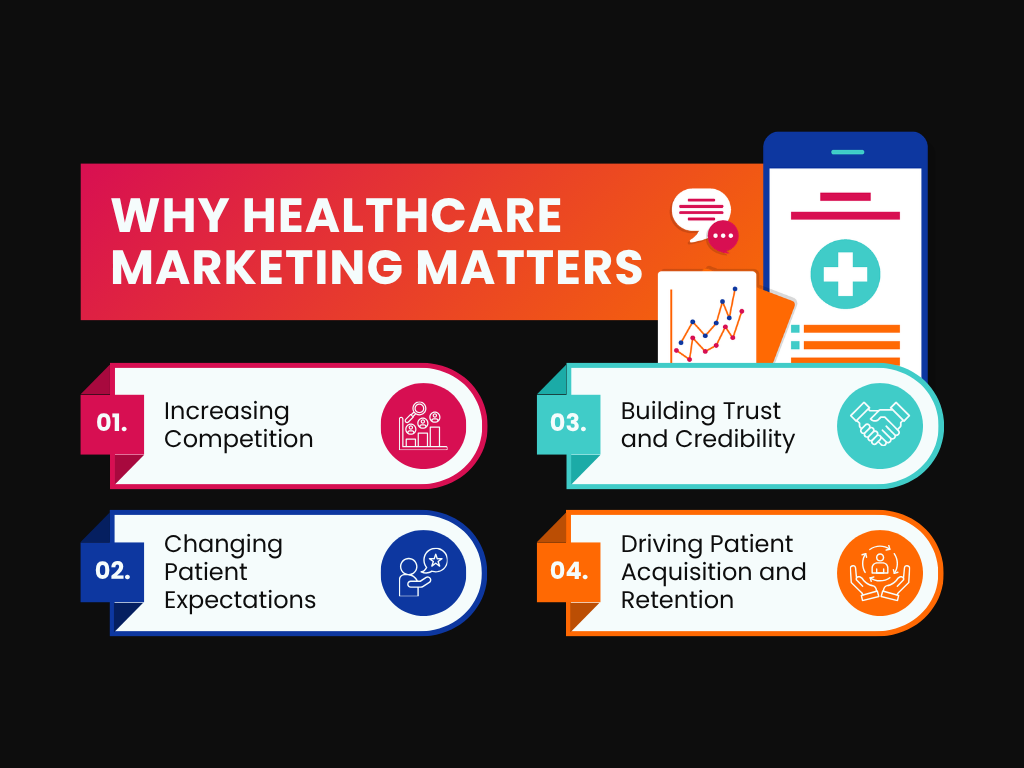
Increasing Competition
The healthcare industry is more competitive than ever. With numerous providers offering similar services, standing out from the crowd has become essential. Healthcare marketing helps you highlight what makes your practice unique, whether it’s advanced technology, specialized treatments, or exceptional patient care. By showcasing your strengths, you can attract more patients and stay ahead of the competition.
Changing Patient Expectations
Patients today are savvy consumers of healthcare information. They no longer rely solely on referrals; instead, they research, compare, and read reviews before making decisions. This shift means that healthcare providers must meet patients where they are—online. Effective healthcare marketing ensures that your practice appears in search results, offers engaging content, and provides the information patients need to make informed choices.
Building Trust and Credibility
Trust is the cornerstone of any patient-provider relationship. A well-crafted marketing strategy can help build and maintain this trust. By sharing success stories, patient testimonials, and expert advice, you can create a positive brand image that resonates with patients. This credibility not only attracts new patients but also fosters loyalty among existing ones, encouraging them to return and refer others.
Driving Patient Acquisition and Retention
Effective healthcare marketing directly impacts patient acquisition and retention. Through targeted campaigns, you can reach potential patients who are actively seeking the services you offer. Additionally, by maintaining an informative and engaging online presence, you can keep existing patients engaged and satisfied. This dual approach ensures a steady stream of new patients while keeping current patients loyal to your practice.
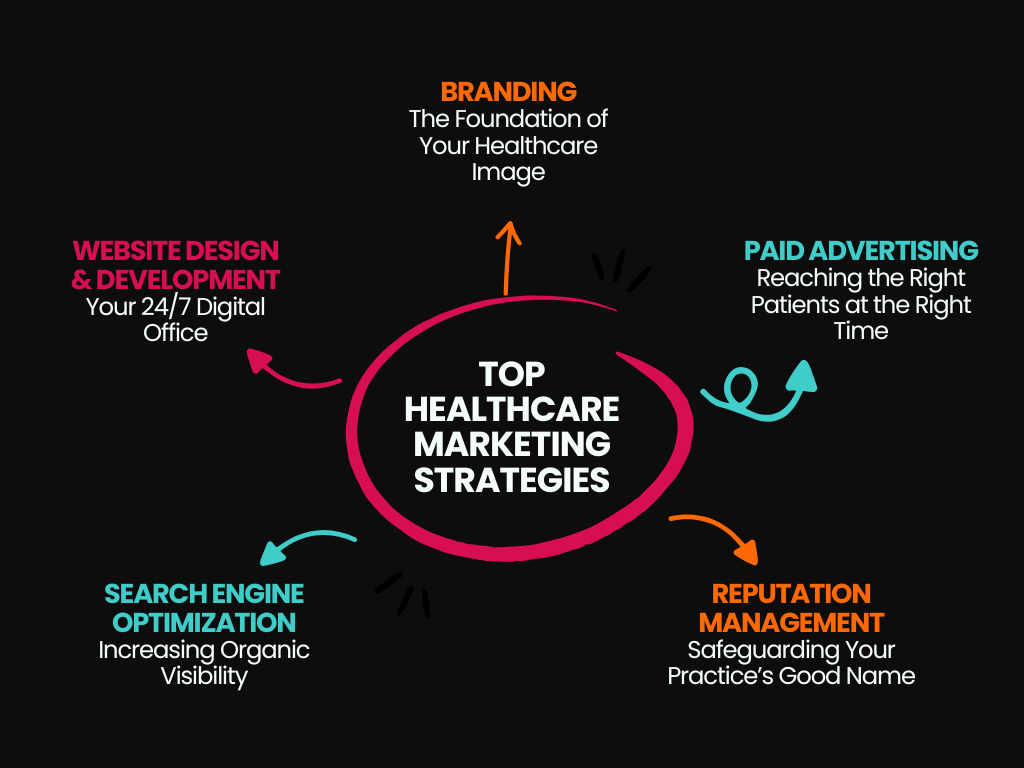
Top Healthcare Marketing Strategies
Branding: The Foundation of Your Healthcare Image
You might not think of branding in healthcare, but it’s an essential piece of the puzzle. Branding encompasses everything from your logo to your messaging, acting as your practice’s signature that patients recognize and trust.
Website Design & Development: Your 24/7 Digital Office:
In today’s digital age, having a well-designed website is non-negotiable. Your website serves as your 24/7 digital office, providing patients with easy access to information and services anytime, anywhere. It’s often the first impression potential patients have of your practice, so make it count with a professional and welcoming online presence.
Paid Advertising: Reaching the Right Patients at the Right Time
Connecting with new potential patients is essential for any healthcare marketing strategy. Paid advertising ensures your message reaches the right people at the right time and place. By targeting locations, demographics, and interests through platforms like Google Ads and social media ads, you can quickly and effectively increase your visibility and attract new patients.
SEO (Search Engine Optimization): Increasing Organic Visibility
Instead of reaching for a phone book, most people start their search for a healthcare provider online. Showing up at the top of search results gives you a huge advantage. SEO, or Search Engine Optimization, is the practice of enhancing your website to rank higher in search engine results. This strategy boosts your online visibility, bringing in more organic traffic over the long term.
Reputation Management: Safeguarding Your Practice’s Good Name
With a plethora of review sites to browse, potential patients are likely to check online reviews before choosing a healthcare provider. If your reviews aren’t looking great, they might pass you up for someone else. Don’t let that happen—effective reputation management can safeguard your practice’s good name.
Boost Your Practice with Expert Healthcare Marketing Strategies
We know that building a strong healthcare marketing strategy can feel overwhelming. There’s a lot to understand and even more to do, and as busy doctors and practice managers, finding the time can be nearly impossible. That’s where we come in.
At Curiosity Marketing Group, we excel in healthcare marketing because of our extensive experience. With that experience comes a deep understanding of the unique challenges you face, from keeping online review responses HIPAA compliant to managing patient expectations. We’ve been there and done that.To help you get started, we also offer resources tailored for healthcare marketing, like our ebook, “How to Build a Content Strategy for Your Healthcare Practice.” If you’re ready to elevate your practice, reach out for a free consultation, and let us help you create a winning plan
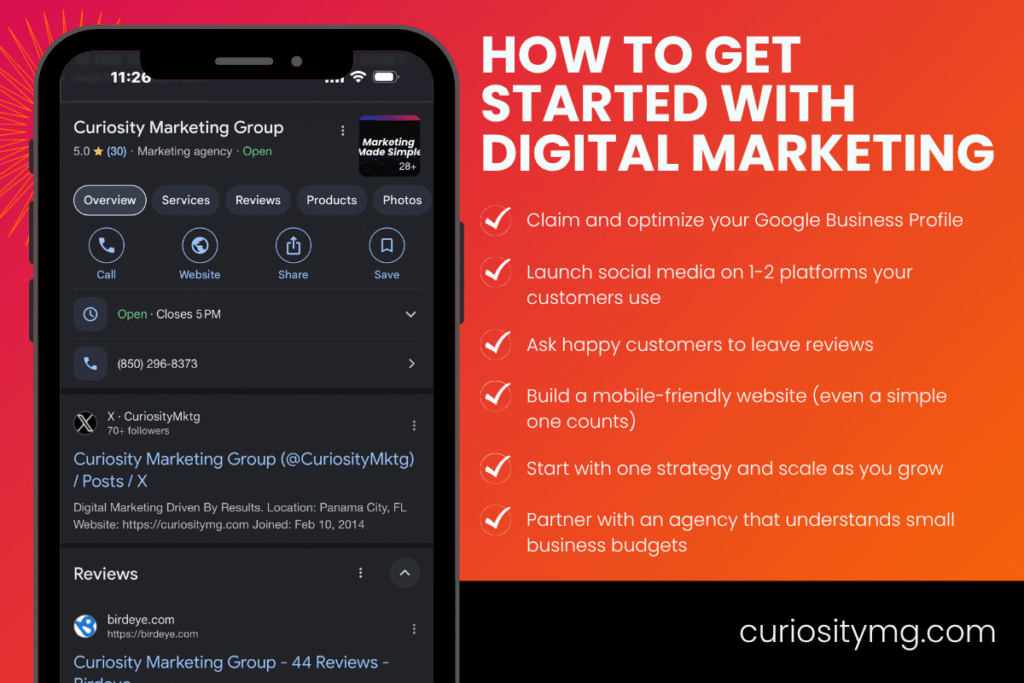
As a small business owner, you have a lot on your plate – from managing daily operations to ensuring customer satisfaction. With a limited budget and resources, entering the world of online marketing can seem daunting. But did you know that digital marketing offers an easier and more cost-effective way for small businesses to thrive?
In a nutshell, digital marketing can help you:
Reach more people
Build a larger loyal customer base
Increase your return on investment (ROI)
In this blog, we’ll delve into the benefits of digital marketing for small businesses so you understand why it’s something you really can’t afford to ignore — and we’ll share practical tips to help you get started!
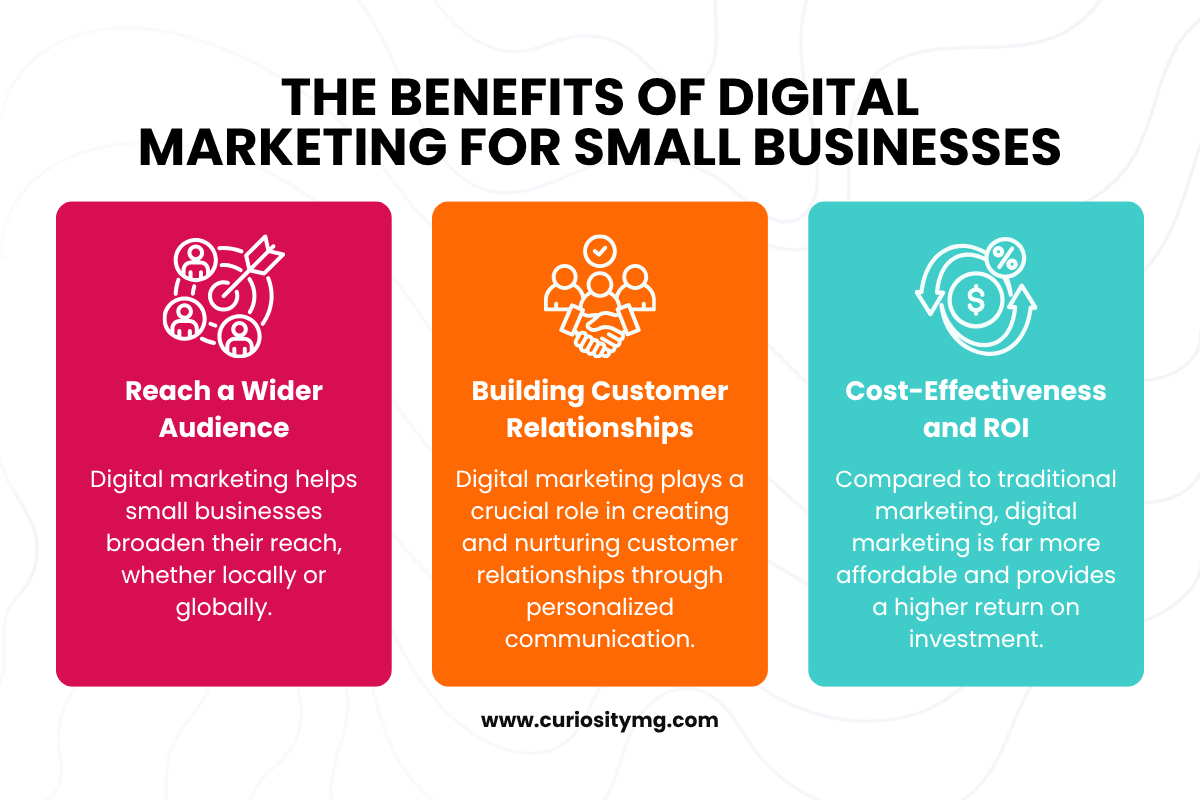
The Benefits of Digital Marketing for Small Businesses
The true power of digital marketing lies in its ability to dramatically increase your business’s visibility and exposure. By embracing digital strategies, you can connect with more people and build stronger relationships without losing your local charm.
Reach a Wider Audience: Digital marketing helps small businesses broaden their reach, whether locally or globally. With the internet, your local store can attract customers from nearby neighborhoods or from across the world, depending on your goals.
Building Customer Relationships: Digital marketing plays a crucial role in creating and nurturing customer relationships through personalized communication. Tools like social media allow you to interact directly with your customers, building a loyal community around your brand. You can maintain that homegrown feel of being a small local business while sharing your story across channels.
Cost-Effectiveness and ROI: Compared to traditional marketing, digital marketing is far more affordable and provides a higher return on investment. With targeted and measurable strategies, you can make the most out of your marketing budget. The scalability of digital marketing means you can start small and expand your efforts as your business grows, ensuring that you get the best possible results without overspending.
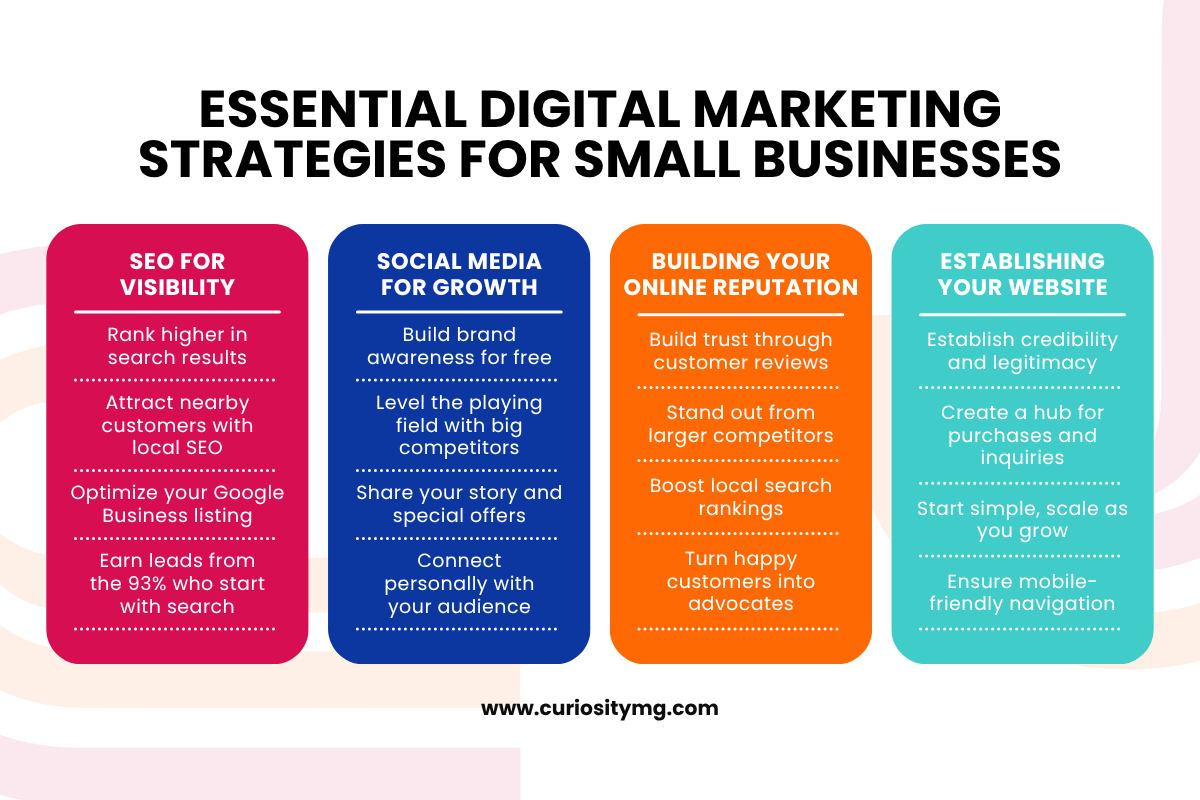
Essential Digital Marketing Strategies for Small Businesses
SEO (Search Engine Optimization) for Online Visibility
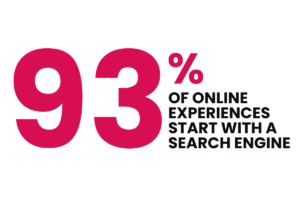
SEO is crucial for all businesses because it boosts visibility in search engines, helping potential customers find you. 93% of online experiences start with a search engine, and top results get the most leads.
For brick-and-mortar stores, local SEO helps attract nearby customers. Optimize your Google My Business listing, use local keywords, and gather positive reviews to improve local search rankings. For businesses with a service area or no physical presence, focus on producing high-quality content and link-building to reach a broader audience.
Leveraging Social Media for Growth
Social media platforms are cost-effective for engaging customers and building brand awareness. They’re free to use and great for reaching a broad audience.
For small businesses, social media marketing levels the playing field with larger chains. You can share your unique story, promote special offers, and connect personally with customers.
Building and Maintaining a Positive Online Reputation
Online reviews shape how potential customers perceive your business. Managing your online reputation builds trust and sets you apart from competitors – even large companies.
Encouraging satisfied customers to leave reviews is a powerful and free strategy that can elevate your online presence above the competition, as it also impacts your ranking in local business searches.
Establishing Your Online Home Base
A professional website is essential for credibility and visibility. It’s your online hub where customers learn about your products/services, make purchases, and contact you.
A well-designed website legitimizes your business. Start with a cost-effective template if custom design is out of budget, ensuring it’s mobile-friendly and easy to navigate.
Why Investing in Digital Marketing Services Pays Off
Starting Small and Growing Big: It’s okay to start small. You don’t need to invest a massive amount right away. A good digital marketing agency understands the constraints of a small business budget and will work with you to maximize your resources. By starting with the essentials and gradually expanding your efforts, you can build a strong digital presence without breaking the bank.
Cost-Effective Strategies: Hiring a professional helps you spend your marketing dollars where they will make the most impact. With expert guidance, you can be sure you get the most bang for your buck.
Outsourcing for Efficiency: Outsourcing digital marketing tasks allows you to focus on what you do best – running your business. It saves you time and the headache of trying to master complex marketing strategies on your own. An experienced agency brings expertise and a fresh perspective to your marketing efforts, ensuring that your campaigns are effective and up-to-date with the latest trends.
Scaling with Your Growth: A reliable digital marketing agency will grow with you. As your business expands, your marketing needs will evolve. A good agency will adapt its strategies to meet your changing requirements, helping you scale your marketing efforts efficiently. This partnership ensures that your business continues to thrive without the constant need to find new marketing solutions.
Get Started with a Digital Marketing Agency that Understands Small Businesses
No matter where you are in your marketing journey—whether you’re starting from scratch or looking to take your efforts to the next level—Curiosity Marketing Group is here to help. We have years of experience working with small businesses and know how to create strategies that drive growth. We’re excited to meet you, understand your goals, and help transform your business. Reach out to us today!
Let’s be real—no matter how fantastic your business is, bad reviews are going to happen. It’s not an “if” but a “when.” While it might be tempting to ignore or dismiss these reviews, especially if you believe your service is top-notch, how you respond (and that you respond) can significantly impact your business’s reputation and customer trust.
At Curiosity Marketing Group, we’ve encountered a wide range of client attitudes toward negative reviews—from outright panic to complete indifference. Our mission is to provide you with practical, straightforward advice on navigating these tricky waters, ensuring your responses enhance your brand rather than detract from it.
Why It’s Crucial to Respond to Negative Reviews
Public perception can make or break a business. A single negative review might feel like a personal attack, but it’s important to remember that your response—or lack thereof—sends a message to potential customers. Ignoring a bad review is not just about losing one customer; it’s about losing many who are silently watching how you handle criticism.
Plenty of times, we’ve seen businesses fall into common traps. Some believe that if a customer left a negative review, they weren’t the right fit anyway. Others feel overwhelmed and decide that addressing reviews isn’t a priority. Some simply disagree with the review and see no need to engage.
One of the most critical pieces of advice we can give is this: Responding to a review is much more about sending a signal to others who are considering your businessand much less about that individual reviewer.
When you respond, you demonstrate that your business is proactive, customer-focused, and dedicated to continuous improvement. It’s about managing how others perceive your brand, showing that you value every piece of feedback, and reinforcing your commitment to exceptional service. So, making it a priority to respond to negative reviews is a pretty huge deal.
Can You Remove Bad Reviews?
One of the most common questions we get from clients is, “Can you remove bad reviews?” If it were that easy, we’d probably see a lot fewer negative reviews online. Platforms like Google, Facebook, and Yelp have strict guidelines to ensure they provide a holistic and accurate picture of your business.
When Can a Review Be Removed?
While it’s generally not possible to remove a review simply because it’s negative, you can report reviews that violate platform guidelines. This includes:
Hate speech or offensive language
Spam or fake content
Irrelevant information
Conflicts of interest (e.g., reviews from competitors)
If a review meets any of these criteria, you can report it for removal, but keep in mind that the platform ultimately decides whether to take down the review.
What to Do If You Get a Bad Review
Negative reviews can feel like a punch in the gut, especially when the feedback is harsh or even untrue. Sometimes, reviews lack context, leaving you with a nasty one-star rating and no explanation. We’ve seen plenty of bewildering reviews ourselves, and let us tell you, some are real head-scratchers.
When this happens, the first step is to stay calm. That’s easier said than done, of course, but acting impulsively can escalate the situation and cause more harm than the original bad review. Take a moment to vent privately if needed, then collect yourself. Investigate internally to understand the backstory or any truth to the feedback. This preparation helps you respond thoughtfully and shows your commitment to resolving issues and improving your service.
What if the Bad Review is Completely Unfair or Untruthful?
You may encounter a review that feels completely off-base. Maybe the customer misrepresents the situation or exaggerates the issue entirely. And there’s always the possibility of encountering a completed fabricated review.
Here’s the key takeaway: Even when a review feels unfair, the core principles of responding professionally still apply. Why? Because, again, your response isn’t just for the original reviewer. It’s for potential customers silently reading online, gauging your brand’s character.
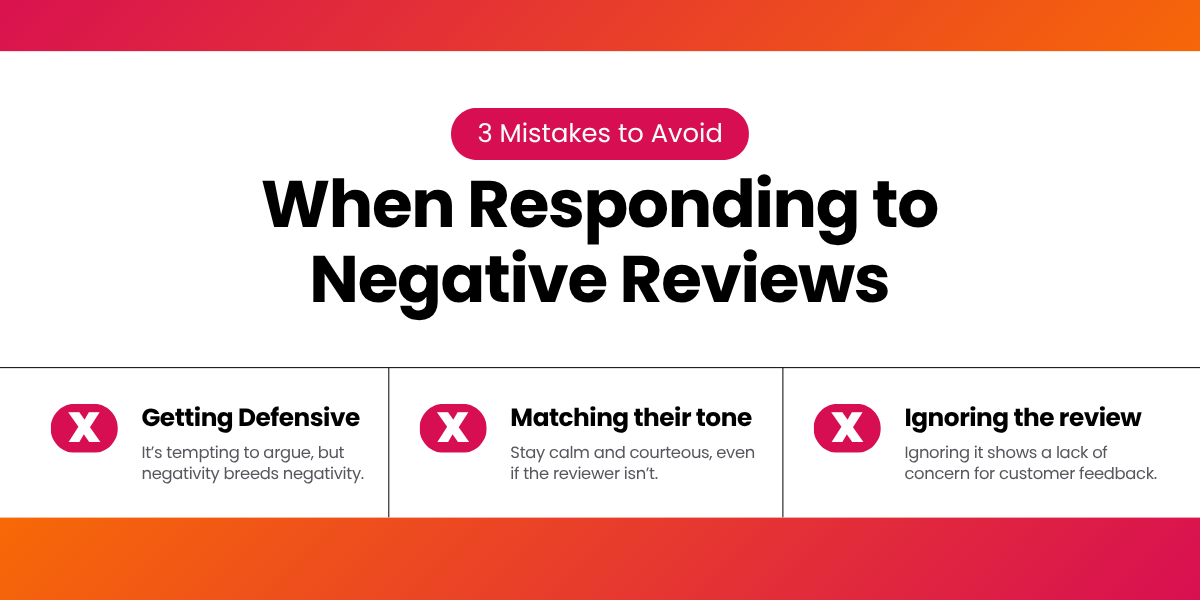
Three Mistakes to Avoid When Responding:
Getting defensive: It’s tempting to argue, but negativity breeds negativity.
Matching their tone: Stay calm and courteous, even if the reviewer isn’t.
Ignoring the review: Ignoring it shows a lack of concern for customer feedback.
Ready to craft a stellar response that turns a negative situation into a positive one?
Head over to Part 2 where we’ll provide you with a step-by-step guide, a customizable response template, and real-life examples to empower you to respond like a pro.
So you got a negative review. Now what? In Part 1 of our Negative Review Survival Guide, we explored the power of staying calm and professional. Now, in Part 2, we’ll unveil the secrets behind crafting a stellar response that showcases your brand’s character and wins over potential customers.
What to Include in Your Response to a Negative Review
After you’ve calmed down and gathered the necessary information, it’s time to craft your response. Thankfully, there are some simple guidelines you can follow to strike the perfect balance with customers.
1. Thank the Customer for Their Feedback
It might seem odd to thank someone who left you a negative review, but expressing gratitude shows that you value all feedback—good, bad, and ugly. Thanking the reviewer demonstrates that you care about your customers’ opinions and are committed to improvement.
Examples: “Hello, Paul, thank you for taking a moment to tell us about your experience at our location.” “Thank you for bringing this issue to our attention, Nikky.”
2. Acknowledge the Customer’s Concerns and Apologize
The most obvious part of any good bad review response is addressing the customer’s concerns, but there is an art to doing so effectively. Start by using the customer’s name to make them feel personally heard and valued. Most importantly, remember that regardless of your feelings about the review or its accuracy, it’s essential to avoid arguing, as it can seem antagonistic and may escalate the issue further. Public disputes rarely end well.
While an apology is a key component of your response, it’s important not to overdo it. Over-apologizing can appear insincere and unprofessional. A straightforward, heartfelt apology often works best.
Examples: “Helen, we sincerely apologize for the frustration and inconvenience you experienced during your recent visit.” “We are sorry to hear that you had a negative experience with one of our staff, Mason.”
3. Take Responsibility
Taking responsibility in your response, even in a general sense, demonstrates your commitment to high standards and customer satisfaction. It’s less about confessing fault and more about reaffirming your business values and showing what your business stands for.
Examples: “We strive to provide excellent customer service and regret that we missed the mark this time.” “While our staff takes pride in our service, we realize that we may occasionally fall short.”
4. Offer to Rectify the Situation or Discuss It Further Privately
This is typically the final part of your response. It’s not enough to apologize; prospective customers want to know what actions you’ll take to make things right. This doesn’t need to be a grand gesture; often, it can be as simple as inviting the reviewer to contact you directly to discuss the matter. This also helps take the discussion offline and out of the public eye.
Examples: “Please don’t hesitate to reach out to our management team at [phone number] to see how we can resolve this for you. Thank you.” “We would like to personally address your concerns and find a resolution. Please contact our office at [phone number] so we can discuss your experience in more detail.”
Putting It All Together
Combining these four elements gives you a thoughtful and effective response to negative reviews that is also pretty simple.
Here’s an example you can use as a template. Feel free to tweak it so it fits your business’s unique voice and personality.
Template for a General Negative Review Response:
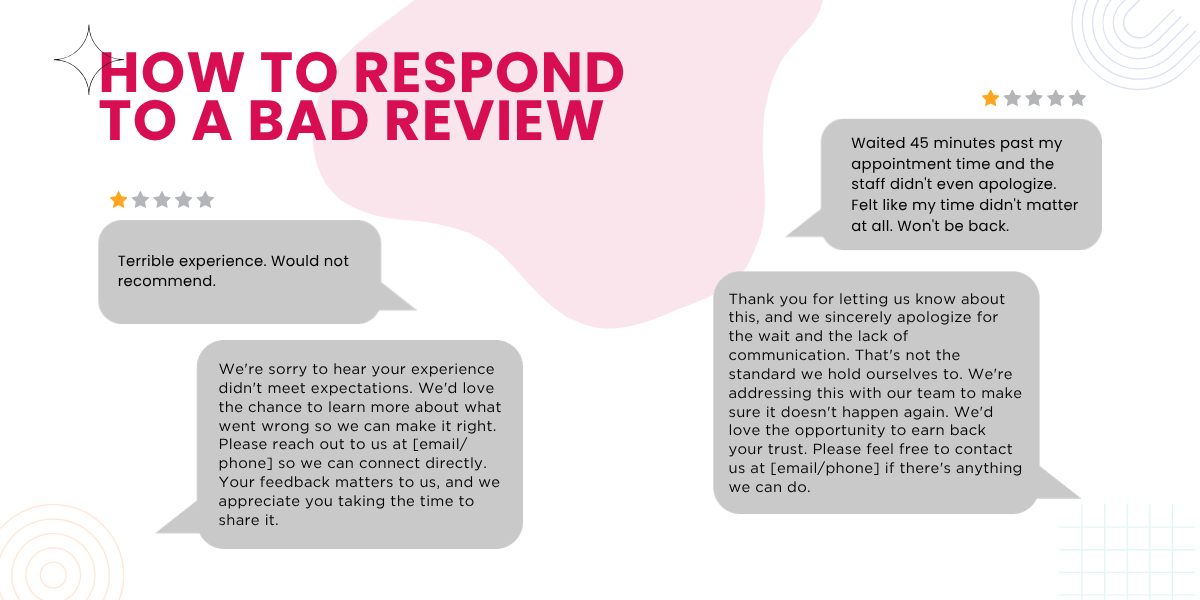
Hi [Customer Name], Thank you for taking the time to share your experience. Your feedback is valuable to us and we appreciate you bringing this to our attention.
We’re sorry to hear about your recent experience and apologize for any inconvenience caused. Our goal is to provide excellent service, and it seems we fell short in this instance.
Please reach out to us at [phone number] so we can make things right. Your feedback is important, and we hope to have the opportunity to serve you better in the future.”
Examples of Good and Bad Responses to Negative Reviews
Understanding what makes a good response is helpful, but seeing real examples can help put it in perspective. Here are some effective and not-so-effective responses to show you what works and what doesn’t.
Good Response Examples
A Good Response to a Bad Haircut
A Good Response to an Uncomfortable Stay
A Good Response to a Plumbing Emergency
What they all got right: They genuinely acknowledged the customer’s negative experience, offered a heartfelt apology, and committed to addressing the issue.
Bad Response Examples
A Bad Response to a Scheduling Issue
What they got wrong: They bashed a competitor, which is unprofessional, and went into excessive detail, making them appear argumentative. This response undermines trust by focusing more on defending themselves than addressing the customer’s concerns.
A Bad Response to a Rude Staff Complaint
What they got wrong: The business owner might be right, but they hurt their case by being bossy and not empathetic. An apology and a polite clarification would have been more effective.
How to Turn a Negative Review Into a Positive Opportunity
Getting a bad review can feel like a huge setback, and it’s nothing to take lightly. However, it can also be an opportunity to improve and showcase your commitment to customer satisfaction. When handled correctly, negative reviews can help you attract new customers and enhance your reputation. They allow you to demonstrate your responsiveness, dedication to resolving concerns, and ability to adapt and grow from feedback.
Navigating this delicate process can be challenging, but that’s exactly why Curiosity Marketing Group is here to help. We provide tailored advice and comprehensive reputation management services to ensure that every response is crafted with care. Our expertise helps you transform potential setbacks into powerful affirmations of your business’s values and customer commitment.
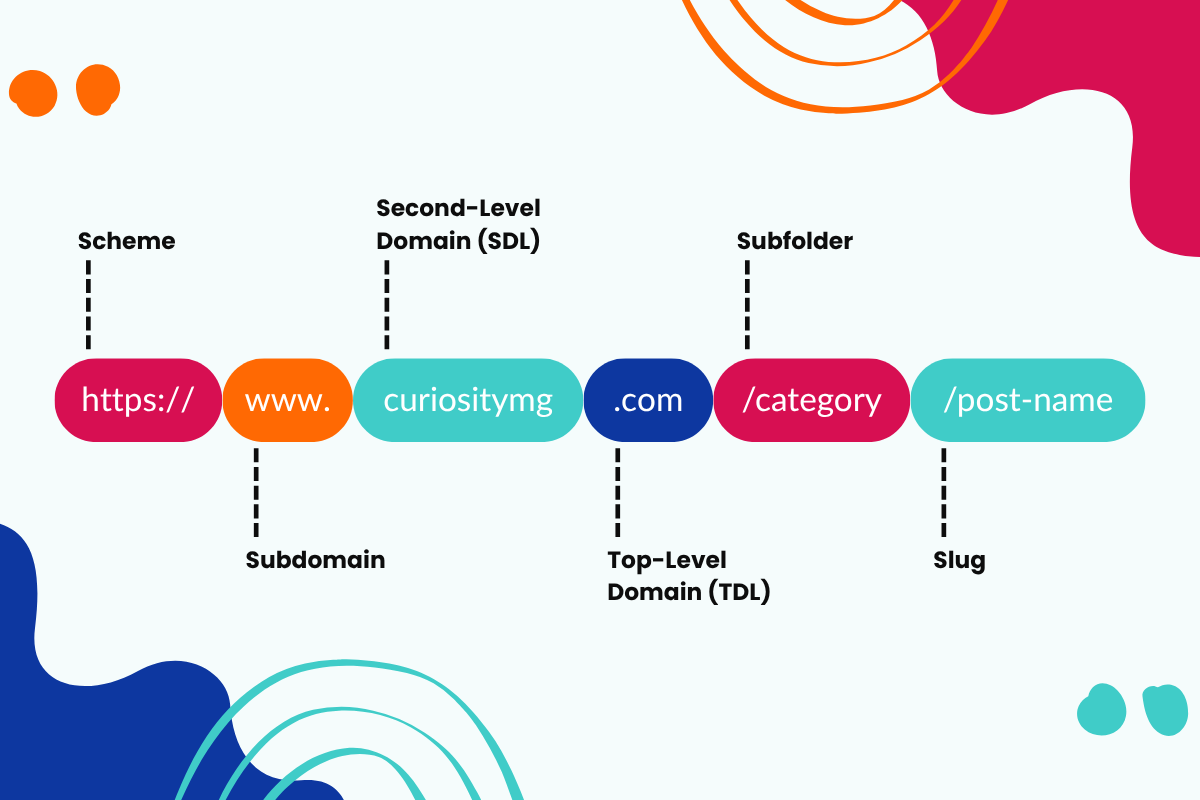
You know that web address you type in to get to a specific page on a website? Well, more often than not, you can just click a link to get there rather than having to type by hand these days, but you get the idea. That’s a URL, or Uniform Resource Locator. Think of it like a home address for your web pages. It’s a critical part of your site and any redesign because it helps both people and search engines figure out what each page is about. When your URLs are clear and well-structured, it makes your site easier to navigate and can even boost your SEO. Alternatively, it can really hurt your ranking. Thankfully, there are ways to avoid that.
Key Takeaways:
Friendly URLs are Easy to Understand: Clear and concise URLs make it easy for users to navigate your website and understand what each page is about.
SEO-Friendly URLs Help You Get Found: Strategic keyword integration in your URLs signals to search engines the content of your pages, potentially improving your ranking for relevant searches.
Planning Your URL Structure Early Saves Time Later: Taking the time to plan your URL structure during the website redesign phase ensures consistency and avoids future headaches.
By following these key takeaways and the steps outlined below, you can ensure your website redesign includes a user-friendly and SEO-friendly URL structure that benefits both your visitors and your search engine ranking.
Crafting User-Friendly URLs
Even the most visually appealing website redesign can be hampered by confusing URLs. Here’s how to craft user-friendly URLs that make navigating your site a breeze:
Clarity and Conciseness: Aim for shorter URLs, ideally under 60 characters. While search engines can process long URLs, shorter ones are easier for users to remember, type, and share. Remember, you’re writing for humans first and search engines second. For example, instead of “website-redesign/the-top-benefits-of-a-website-redesign-for-your-small-to-medium-sized-business.html,” a more user-friendly option would be “website-redesign/the-benefits-for-small-business.html.” This not only improves readability but also keeps the URL focused on the key takeaway (benefits).
Descriptive Titles: Use clear and descriptive words that accurately reflect the content of the page. Instead of a generic URL like “page2.html,” opt for something like “services/seo-optimization.html” This tells users exactly what they can expect to find on the page (SEO optimization services).
Organized Structure for User Experience: Your URL structure should be clear and organized to mirror your website’s hierarchy. This makes it intuitive for users to understand how content is categorized and related. Incorporate relevant keywords while maintaining a user-friendly format. Keywords in your URL can indicate the content of the page to users but prioritize clarity over keyword stuffing.
Optimizing URLs for Search Engines
While user-friendliness should always be your North Star, your URLs can also play a role in search engine optimization (SEO). Here are some technical considerations to keep in mind:
Lowercase Letters: Always use lowercase letters in your URLs. Search engines treat uppercase and lowercase letters differently, and using lowercase ensures consistency for both users and search engines.
Hyphens vs. Underscores: Separate words in your URLs with hyphens (-) instead of underscores (_). Search engines recognize hyphens as separators, allowing them to potentially return your page in search results even if someone searches for a single word within the URL. Underscores, on the other hand, are treated as connectors by search engines.
Stop Words: Minimize the use of stop words (articles like “a,” “an,” “the”) in your URLs. Stop words don’t add significant value to SEO and can clutter your URLs. For example, instead of “the-ultimate-guide-to-seo.html,” a more concise option would be “ultimate-seo-guide.html”
URL Length: As mentioned earlier, strive for URLs under 60 characters for optimal user experience. This length also ensures your URLs are displayed fully in search engine results pages (SERPs). Search engines may truncate longer URLs with ellipses (…), which can make them appear cluttered and less informative to users.
Following these technical SEO best practices can help search engines better understand your website’s content structure and potentially improve your ranking for relevant keywords. Just remember, user-friendliness should always be your top priority when crafting URLs.
Ensuring a Successful Redesign
Redesigning your website is an exciting opportunity to enhance both its user experience and search engine performance. By focusing on a user-friendly URL structure, optimizing for SEO, and managing existing URLs effectively, you can ensure a smooth transition and maintain your site’s visibility.
For more insights on building a strong foundation during a redesign, check out our blog Website Redesign: Don’t Forget SEO and Perform a Site Audit. It’s packed with tips on integrating SEO from the very beginning and ensuring your new website truly resonates with your audience.At Curiosity Marketing Group, we know website redesigns inside and out. If you need help with your project or have any questions, don’t hesitate to reach out. We’re here to ensure your redesign is a success from start to finish.
How do you get eyes on your business site? It often begins with a search. And that’s where SEO vs SEM comes into play.
Whether it’s a quick search for a “coffee shop near me” or a more specific query about the “best noise-canceling headphones,” search engines like Google and Bing play a crucial role in connecting your business with potential customers. The better your visibility on these search engines, the more likely you are to attract this traffic to your site and not let it slip away to your competitors. How do you achieve that visibility? SEM or Search Engine Marketing is your strategy for showing up in searches. But what about SEO? We’ll take a look at that too.
The Difference Between SEO vs SEM
SEM and SEO both play a role in boosting your ranking in search engines. The main difference is that SEM is the overarching strategy designed to increase visibility on search engines. It encompasses strategies like SEO and Paid Search (PPC), meaning that SEO is just a subset of SEM. Let’s take a look at the two main strategies under the SEM umbrella.
The Components of SEM: PPC and SEO
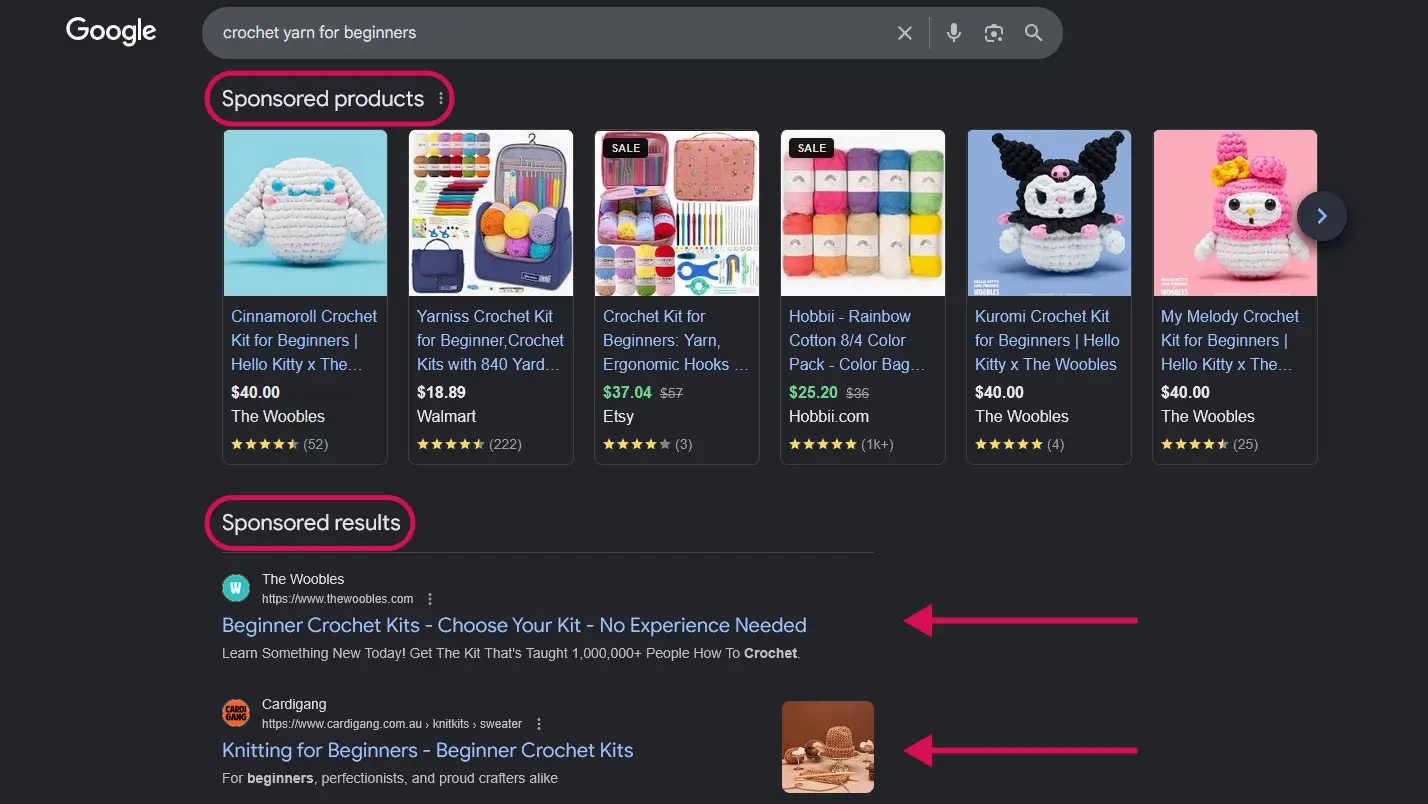
Ever noticed those ads at the top of your search results when you’re looking for something online? And then the list of websites that pop up right after those ads? That’s PPC and SEO at work, and here’s how you can tell them apart:
PPC (Pay-Per-Click): These are the ads you see right at the top of the search engine results, usually marked with a “Sponsored” tag. It’s like a fast pass—companies pay to get in front of the line, ensuring their site pops up first when you’re searching. Each click costs a bit, but it’s a quick way to get seen.
SEO (Search Engine Optimization): Just below those paid spots, you’ll find the organic, unpaid search results. This is where SEO shines. It’s all about making your site the best answer to what people are searching for, naturally drawing them in. No payments for clicks here; it’s about playing the long game by enhancing your content and user experience.
When you search for something, this layout—with PPC ads on top and organic SEO results following—helps you see where businesses are putting their money to grab your attention. Knowing how these pieces fit together gives you a clearer picture of what it takes to make your website stand out in the crowded world of online search.
Paid Search (PPC): The Paid Side of SEM
What is PPC?
Pay-Per-Click (PPC) advertising is a model where businesses pay each time someone clicks on one of their online ads. It’s one of the quickest ways to draw eyes and traffic to your website. Essentially, it’s like buying visits rather than earning them organically through SEO.
Immediate Benefits
The biggest draw for PPC is the near-immediate visibility. Within moments of setting up a PPC campaign, you can be at the top of search results for highly competitive keywords. This visibility is especially crucial when you’re looking to drive traffic during specific promotions or targeting time-sensitive offers.
Paid Search (PPC) Strategies
Keyword Targeting: Selecting the right keywords is critical in PPC campaigns. Tools like Google AdWords allow you to bid on keywords relevant to your target audience, ensuring your ads appear to potential customers who are actively searching for what you offer.
Ad Copy Optimization: Crafting compelling ad copy is vital. This includes the headline, description, and call to action. Your ad copy should be direct and incentivize users to click through to your website.
Landing Page Alignment: Your ad should lead to a landing page that delivers on what the ad promises. This page should be optimized for conversions, providing a clear path for users to follow, whether it’s making a purchase, signing up for a newsletter, or another specific action.
Budget Management: Managing your budget effectively ensures you do not overspend on your PPC campaigns. Setting limits and adjusting bids according to the performance can help maximize ROI and keep you from throwing money to the wind.
Timeline
PPC campaigns can be launched quickly and provide immediate results, which is perfect for short-term goals or promotional periods. However, they require continuous optimization and budget adjustment to maintain effectiveness.
Did You Know? PPC ads can increase brand awareness by up to 80%, and the top 3 paid advertising spots get 46% of the clicks on the page.
SEO: The Organic Side of SEM
What is SEO?
Search Engine Optimization (SEO) is the process of optimizing your website to rank higher in the organic, unpaid search results of search engines. Unlike PPC, SEO focuses on earning traffic through credibility and relevance rather than buying it directly. It’s about making your website the best possible result for a user’s search query.
Long-Term Growth and Sustainability
SEO is a marathon, not a sprint. Its benefits are numerous, but they take a bit more time to cultivate. Once you get started with SEO, you can start to expect:
Increased visibility over time, which helps build brand authority and trust.
Sustained traffic without the ongoing costs associated with PPC.
Better user experience, making it more likely that visitors will stay on your site, explore, and convert into customers.
SEO Strategies
Keyword Research and Optimization: Identifying and integrating relevant keywords throughout your content helps search engines understand and rank your pages for those terms.
Content Creation: Regularly publishing high-quality, informative, and relevant content attracts and engages visitors, which, in turn, improves search rankings.
On-Page Optimization: Ensuring that all technical aspects of your pages (like meta tags, headers, and images) are optimized to help search engines and users navigate and understand your site better.
Link Building: Acquiring high-quality backlinks from reputable sites not only drives direct traffic but also boosts your site’s authority and ranking.
Performance Optimization: Speeding up your website and enhancing mobile-friendliness are crucial for keeping both visitors and search engines happy.
SEO efforts often take months to start showing significant results. However, the gains from these efforts are more durable and cost-effective over the long term. Plus, relying solely on paid search strategies can get expensive without also investing in SEO. As you’ll see, they sort of go hand-in-hand.
Did You Know? Businesses implementing robust SEO strategies can see a return on investment (ROI) five times greater than with traditional marketing over several years. SEO also leads to an average close rate of 14.6% for new leads, significantly higher than traditional methods.
How PPC and SEO Work Together in SEM
While PPC and SEO strategies might seem like opposite sides of the SEM coin, they tend to provide the best results when implemented together. There is actually quite a bit of overlap in the strategies, and the successes achieved with one feed the success of the other. If online visibility is your goal, you’ll want to take a look at how both contribute to the overarching SEM puzzle. Here’s how:
Dominating Paid AND Organic Search: Having both strong SEO and PPC strategies means covering more ground in SERPs. It increases the chances that searchers will click through to your site, whether they’re clicking on an ad or an organic listing.
Reducing PPC Costs through Effective SEO: If you’re looking for more reasons why PPC and SEO belong together, how about cost savings? Well-implemented SEO strategies can significantly decrease your PPC costs. By improving the quality score of your landing pages—enhancing their relevance and user experience, that is—you can achieve lower CPCs Cost Per Click). Search engines reward ads that provide a good user experience with a higher ad rank at a lower cost.
Keyword and Conversion Data Sharing: PPC campaigns provide immediate feedback on keyword effectiveness that can be used to refine SEO strategies. On the other hand, SEO data can inform more effective PPC keyword targeting, ensuring a cohesive approach to search marketing.
Testing and Optimization: PPC is a great tool for testing. You can use it to experiment with different keywords, ad copy, and landing pages to see what performs best. These insights can then be applied to your SEO strategy, particularly in optimizing meta descriptions, page titles, and content for higher conversions.
Supporting Content and Seasonal Campaigns: PPC can be particularly useful for promoting new content or seasonal offers until your SEO efforts gain traction. It supports SEO by driving traffic to newly optimized pages faster, which can accelerate the indexing and ranking process.
Deciding Between PPC, SEO, or a Combined Approach
When to Choose What
Choosing the right approach in search engine marketing can make a big difference in your results. Here are some scenarios to consider when deciding between PPC, SEO, or using both:
PPC for Quick Impact: If you’re launching a new product, running a promotion, or need to see immediate results, PPC is the way to go. It allows you to appear at the top of search results quickly and can generate significant traffic and conversions right when you need them.
SEO for Sustainable Growth: For building a strong, long-term presence on search engines that brings in ongoing, cost-effective traffic, SEO is your best bet. It’s ideal for establishing credibility and authority in your industry over time.
Combined Approach for Comprehensive Coverage: When you want to maximize your visibility and cover all bases, combining SEO and PPC can be powerful. Use PPC to cover competitive keywords that are tough to rank for organically, while SEO builds a solid foundation of organic traffic.
Final Thoughts on SEO and SEM
Remember, think of SEM as the umbrella that covers everything from SEO and PPC to even more specialized strategies. And yes, there’s more—such as Technical SEO, which lays the foundational elements for your site’s SEO performance, and Local SEO, designed to optimize your visibility in specific geographic areas.
Choosing the right mix isn’t always straightforward—it depends on what you’re trying to achieve, who you’re competing against, and how quickly you need results. Crafting a strategy that’s just right for your business means not just spending money, but making it work effectively for you.
Don’t go at it alone. At Curiosity Marketing Group, we help make SEM (and SEO) understandable and manageable. Whether you’re starting fresh or looking to improve your current SEO and SEM strategies, we’re here to guide you.
Curious about your site’s performance? Why not try our free site audit? We’ll show you where you excel and where you could use some work. Get in touch today for a personalized SEO/PPC strategy consultation. Together, we’ll make sure your SEM efforts are hitting the mark.
Social media has woven itself into the very fabric of modern business strategy, particularly for the small business owner looking to carve out a significant space in the marketplace. With platforms like Facebook and Instagram, businesses have access to millions of monthly active users, ready to engage with content, products, and services. It’s a cost-effective way to boost your social presence, driving both engagement and sales through targeted social media marketing for small business strategies. The power of these platforms lies not just in their vast reach but in their ability to foster direct and meaningful connections between businesses and their audience.
The March 5 Outage and its Impact on Businesses
However, March 5, 2024, served as a stark reminder of the vulnerabilities inherent in over-reliance on any single channel. With Facebook down, Instagram down, and reports flooding in about the social media outage affecting users nationwide, the fragility of digital reliance became apparent. For more than an hour, businesses found themselves cut off from their primary communication channels, highlighting an immediate need for a more resilient strategy. This incident wasn’t just a temporary inconvenience; for many, especially those in the thick of crucial sales or customer service operations, it was a wake-up call. The downtime underscored the potential losses—be it in sales, customer trust, or engagement—when the digital threads connecting businesses to their customers are unexpectedly severed.
The Importance of Diversifying Marketing Channels
This event brings into sharp focus the importance of diversifying marketing channels. Relying solely on social media for customer engagement and sales is akin to building your house on a single pillar—stable until the unpredictable happens. In today’s dynamic digital landscape, it’s essential to expand your toolkit, incorporating a mix of traditional and digital channels to maintain that crucial connection with your audience. For the savvy small business owner, this means embracing a broad spectrum of platforms and strategies for social media management and beyond, ensuring that when one channel experiences a hiccup, your business continues to communicate, engage, and grow uninterrupted.
1. Double Down on Email Marketing
Let’s face it: when social media takes a nosedive and platforms like Facebook and Instagram suddenly go dark, it can feel like we’re cut off from our customers. It’s more than just an inconvenience; it’s a missed opportunity for engagement and sales. But here’s the silver lining—this is your cue to spotlight email marketing, a channel you’ve already got at your fingertips, and turn a temporary setback into a strategic advantage.
Keep Your Audience in the Loop with an Informational Email
First up, keep your subscribers in the loop. A sudden Facebook or Instagram down situation can create confusion and frustration. Seize this moment to send out an informational email. This isn’t just about acknowledging the outage but reinforcing your presence. Share a valuable blog post that provides insights or solutions related to the outage, announce an exciting new product launch, or extend a special discount. The key here is to offer genuine value, transforming a potential setback into an opportunity to deepen customer engagement.
Make It Personal: Segment Your Audience
Generic blasts are out; personalized communication is in. Segment your email list based on customer interests and past interactions. By tailoring your messages, you not only heighten the relevance of your emails but also significantly enhance the likelihood of fostering stronger connections. This segmentation allows you to send targeted content that resonates on a personal level, making your brand not just seen but felt.
Rekindle Old Flames with Re-Engagement Campaigns
It’s natural for email engagement to ebb and flow, but don’t let silence turn into disengagement. Utilize this time to rekindle the spark with subscribers who haven’t interacted with your brand in a while. Craft a heartfelt “We Miss You!” campaign, offering exclusive deals or highlighting the invaluable benefits of being a part of your email community. These campaigns can serve as a gentle reminder of your brand’s value, encouraging lapsed subscribers to re-engage and rediscover what they’ve been missing.
Incorporating these strategies within your email marketing efforts not only demonstrates adaptability but also underscores your commitment to maintaining a continuous, meaningful dialogue with your audience. By doubling down on email marketing, you ensure that your voice remains heard, your presence felt, and your brand resilient, no matter what digital challenges may arise.
2. Leverage Your Website and Blog
Think of your website as your digital storefront—it’s always open, even when social media decides to take a break. This is your turf, where you control the narrative and the content, making it an ideal spot to keep the conversation going with your audience. Here’s how to make sure your website and blog are more than just a backup plan; they’re integral parts of your communication strategy.
Keep the Content Coming
Social media is down? No problem. Your website is up and running, and it’s hungry for content. This is the time to roll out fresh blog posts that resonate with your audience’s needs and interests. Share the latest industry news, insights, or tips that your customers would find useful. Ever thought about hosting a live Q&A session directly on your site? Now’s as good a time as any because here’s the kicker: while social platforms might be hitting a snag, search engines are still going strong. Quality content published on your blog or website remains discoverable in search results, ensuring you can still reach your audience. It’s all about providing value and keeping your audience engaged, proving that your digital presence extends far beyond the realms of social media.
Smart Use of Website Pop-Ups
Pop-ups can be a bit like cilantro; people either love them or hate them. But when used correctly, they can spice up your website effectively. The key is not to bombard your visitors but to offer them something they’ll find valuable. Maybe it’s an invite to join your email list for exclusive insights or a free download of a guide or tool that can help them in some way. These strategic pop-ups serve as gentle nudges for visitors to engage further with your brand, turning casual browsers into potential leads.
Mobile Optimization is Non-Negotiable
In today’s world, if your website isn’t friendly to a smartphone, it’s not friendly at all. With more people accessing the internet via their phones than ever before, ensuring your site is mobile-optimized is crucial. This means fast load times, easy navigation, and content that adjusts seamlessly to smaller screens. Especially during times when social media apps are down, your mobile-friendly website can be a beacon for lost souls looking for their internet fix. Make sure that beacon is shining bright and clear, guiding them right to your content and offerings.
Your website and blog aren’t just fallback options; they’re your online foundation. By keeping them stocked with engaging content, user-friendly with strategic pop-ups, and accessible through mobile optimization, you’re ensuring your business remains connected and communicative, no matter the state of social media. This proactive approach not only diversifies your online presence but also reinforces your brand’s resilience in the face of digital disruptions.
3. Explore Alternative Messaging Platforms
When social media is off the grid, it’s a golden opportunity to tap into the diverse world of alternative messaging platforms. These channels offer a direct and personal way to connect with your audience, ensuring your communication lines remain buzzing with activity. Let’s delve into how you can harness these platforms to keep the engagement alive and kicking.
Harness the Power of Text Marketing
Text messages have an impressive track record for high open rates, making SMS marketing a goldmine for direct communication with your customers. Imagine sending a quick update, a special promotion, or exclusive content right to their pockets. The immediacy and personal touch of a text message can dramatically boost engagement and keep your audience connected to your brand. However, remember the golden rule: always obtain consent before sending SMS messages. This not only respects your customers’ privacy but also ensures your marketing efforts are welcome, building trust and loyalty in the process.
Dive into Messaging Apps
With the rise of smartphone usage, messaging apps like WhatsApp and Telegram have become household names, with millions of active users daily. If your target audience frequents these platforms, why not meet them where they are? Create a dedicated group or channel for your business to share updates, host interactive polls, or provide stellar customer support. These platforms offer a more informal, conversational way to interact with your audience, fostering a sense of community and belonging. Just be sure to familiarize yourself with and adhere to platform-specific regulations to maintain a positive and compliant presence.
Exploring alternative messaging platforms when social media is down not only showcases your adaptability as a brand but also deepens your engagement with your audience through more personal and direct channels.
4. Direct Mail: A Tangible Touch in a Digital World
In our rush to embrace digital solutions for everything from communication to commerce, the unique appeal of direct mail as a marketing strategy has not diminished. Rather, it offers a compelling contrast to the ephemeral nature of online messages and notifications. While it’s true that not every mailbox drop is met with enthusiasm, when executed thoughtfully, direct mail can cut through the clutter of digital ads to deliver a memorable and engaging experience. Here’s a closer look at why incorporating direct mail into your customer relationship efforts can create meaningful connections and stand out in the crowded marketing landscape.
The Unmatched Impact of Direct Mail
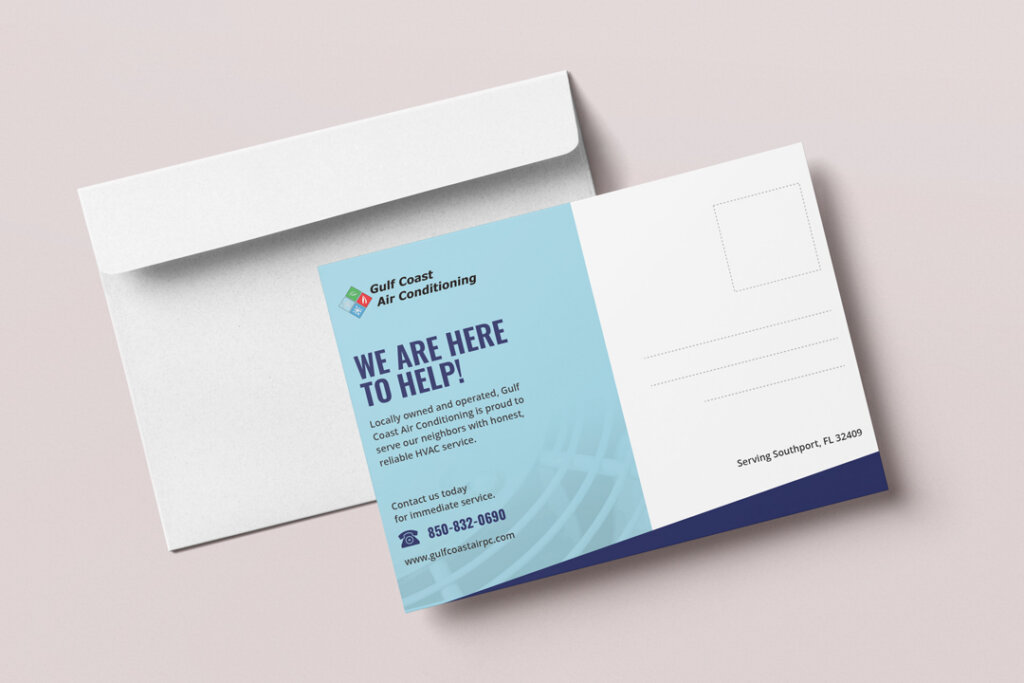
Direct mail brings with it the power of tangibility—a rarity in today’s digital-first landscape. Sending out postcards with special offers or personalized messages does more than just communicate a promotion; it conveys thoughtfulness and consideration. This tangible connection fosters a unique bond between your brand and your customers, making them feel valued and remembered.
Opening the Door to Engagement: The 90% Statistic
One of the most compelling reasons to consider direct mail is its incredible open rate. According to the ANA, 90% of direct mail gets opened by the recipient. This statistic is not just a number; it’s a testament to the effectiveness of direct mail in reaching and engaging your audience. In a world where digital messages can be easily overlooked, direct mail stands out, ensuring your message not only reaches your customers but captures their attention.
Enhanced Recall and Brand Connection
Research indicates that physical materials, such as direct mail, have a more significant impact on memory and recall compared to digital content. This isn’t just about getting noticed—it’s about leaving a lasting impression. Personalized direct mail pieces are easier to remember and recall, enhancing brand recall and influencing decision-making over time. The sensory experience of interacting with a physical piece of mail—touching it, reading it, even smelling it—creates a memorable connection that digital interactions struggle to match.
By focusing on direct mail within your broader marketing strategy, you’re not only reaching your customers in their homes but also resonating with them on a deeper level. It’s a clear signal that your brand values genuine connections, going beyond the screen to engage in a manner that’s both meaningful and memorable. Direct mail, with its blend of personalization and physicality, ensures that your message is not just seen but felt, leaving a lasting imprint that can bolster customer relationships and brand loyalty.
5: Foster Brand Advocacy and Community Building
Building a community around your brand isn’t just about staying active on social media; it’s about engaging with your audience in ways that resonate deeply and foster genuine advocacy. During times when social media might be taking a timeout, there are powerful strategies you can employ to continue building that sense of community and support for your brand. Let’s delve into how focusing on customer reviews and creative contest strategies can elevate your brand’s presence and credibility.
The Currency of Customer Reviews
Think of customer reviews as the currency of the digital age—a crucial component of your brand’s online visibility and reputation. Positive feedback on platforms like Google My Business doesn’t just sing praises of your services or products; it signals to both prospective customers and search engines that your business is legitimate, trustworthy, and worthy of their time and investment. During social media downtime, it’s an opportune moment to remind your customers of the importance of their feedback. Encouraging them to leave a review is not just about collecting accolades; it’s about bolstering your local visibility and enhancing your search engine optimization efforts. Remember, a robust collection of positive reviews can be a game-changer for attracting new customers and establishing your business as a leader in its niche.
While social media platforms are popular venues for contests and giveaways, taking these activities off-platform can offer your business greater flexibility and control. For instance, the strict rules governing contests on platforms like Facebook—such as prohibitions against giving away physical goods or requiring specific actions like tagging and following—can significantly limit how you engage with your audience. By hosting contests and giveaways directly on your website or through email, you gain the freedom to set your own terms. This approach not only allows you to collect valuable customer contact information without running afoul of platform guidelines but also ensures that both your business and your customers derive tangible benefits from the engagement. Whether it’s gathering user-generated content, encouraging email sign-ups, or simply boosting your website’s traffic, running these promotions independently empowers you to craft more meaningful and mutually rewarding interactions.
In implementing these strategies, you’re not just filling the void left by social media downtime; you’re taking proactive steps to strengthen your brand’s community and advocacy. By valuing and actively seeking customer reviews and creatively engaging your audience with well-crafted contests, you underscore your commitment to building lasting relationships. These efforts not only enhance your brand’s reputation and visibility but also lay the groundwork for a vibrant community of loyal supporters.
Building Resilience in Your Marketing Strategy
If March 5th taught us anything, it’s that diversification isn’t just a nice-to-have; it’s a necessity. Relying solely on social media platforms for customer engagement and sales is akin to walking a tightrope without a safety net. We know that it’s extremely cliche saying this, but the digital landscape is ever-changing, and the tools we use today may not always be available tomorrow. By broadening your marketing approach to include email marketing, direct mail, alternative messaging platforms, and leveraging your website and blog, you’re not just mitigating risk; you’re enhancing your ability to connect with your audience in more meaningful ways.
These strategies underscore the importance of building a resilient marketing ecosystem—one that thrives on variety and adapts to change. Embracing this approach ensures your business remains visible, engaging, and ahead of the curve, no matter what surprises the digital world may bring.
We understand that navigating these waters can seem daunting, especially when you’re trying to run a business. If the thought of diversifying your marketing strategy feels overwhelming, know that you don’t have to go it alone. Curiosity Marketing Group is here to help you craft a tailored, dynamic marketing plan that not only future-proofs your advertising efforts but also deepens the connection with your audience. Whether it’s refining your email marketing campaign, exploring content strategies for your site, or boosting your online reviews, our team has the expertise and creativity to ensure your brand not only survives but thrives.
Ready to diversify your marketing strategy and build a stronger connection with your audience? Contact Curiosity Marketing Group today. Let’s create a marketing plan that’s as resilient and dynamic as the world we live in.
Somehow, another year has passed once again. As we step into 2024, it’s clear that the landscape of marketing trends is evolving more rapidly than ever. Sure, we say that every year, but in 2023, we witnessed AI’s dramatic entrance, transforming how we approach marketing. AI was like a new player just stepping onto the field, but now, with the cat out of the bag, expect to see it seamlessly woven into our daily lives, unleashing new potentials and reshaping strategies in ways we’re only beginning to imagine. It’s an exciting time, but let’s face it, it can also be a bit daunting. And it’s not just AI; shifting consumer behaviors and other market trends are also part of this evolving narrative.
Now, let’s be real: keeping up with all these changes is no small feat. It’s crucial to stay on your toes because, in this fast-paced world, not staying in the loop could mean you’re left playing catch-up. But don’t worry, we’re here to make sense of it all. We’ve zeroed in on the top 7 trends that are shaping 2024. Think of this as your go-to guide for navigating the year ahead. We’re here to help you not just keep up but really shine and make the most of these exciting times. Ready to tackle 2024 head-on?
1. The New Era of AI Driven Personalization
We can’t talk about marketing trends for 2024 without putting AI in the spotlight. It’s here to stay, but with a twist: AI now plays a supporting role rather than the lead. In an era where consumers crave authenticity, relying solely on AI-generated content just isn’t good enough. At least for now, the human touch remains vital, bridging the gap between technological advancement and genuine consumer engagement.
AI’s true strength lies in enhancing personalization and efficiency. AI-driven personalization allows for content that not only resonates but also deeply engages each individual, offering a seamless blend of AI efficiency and human creativity. This approach is revolutionizing advertising trends, from providing personalized experiences at a grand scale to breaking barriers in predictive analytics and automating routine tasks.
2024 is all about harnessing AI to elevate marketing strategies, combining its analytical prowess with the irreplaceable human element. This balance is crucial in overcoming personalization challenges and truly standing out in the dynamic world of marketing.
2. Building Trust and Relationships: The Heart of Marketing
In the wake of AI’s ascent, there’s an even stronger yearning for trust and genuine relationships in the marketing world of 2024. The hype around AI has led consumers to crave something more authentic, more human. Now, channels like social media aren’t just platforms for brands to showcase products; they’ve transformed into hubs of engagement and customer service. They’re becoming direct lines that connect customers to brands in meaningful ways.
Building customer relationships has become the cornerstone of successful marketing strategies. It’s about crafting stories and experiences that resonate on a personal level, creating a sense of connection and belonging. Authenticity isn’t just a buzzword; it’s the currency in this new era of marketing. Brands that master the art of genuine connections are the ones that will thrive, turning trust and loyalty into the pillars of their customer relationships.
3. Sustainability and Ethical Marketing: Aligning Values with Action
Along with authenticity, consumers are looking more and more for brands they can believe in – brands that don’t just sell to them but speak to them. This growing consumer consciousness goes beyond traditional marketing appeals like discounts and special offers. Even in the face of rising inflation, a staggering 82% of shoppers are insisting that a brand’s values align with their own.
Now, let’s talk about what this really means. It’s not just about avoiding controversy or ticking boxes. It’s about brands genuinely taking a stand on social issues, going beyond the expected. We’re seeing more and more examples of brand activism, where companies aren’t afraid to dip their toes into socially conscious waters. It’s bold, it’s brave, and frankly, it’s what consumers are starting to demand.
But hey, ethical marketing isn’t just about making a statement. It’s about backing it up with real action. We’re talking ethical strategies that aren’t just part of your marketing plan but are embedded in your brand’s DNA. Whether it’s tackling ethical issues head-on in your campaigns or ensuring your advertising is as transparent as it is creative, it’s all part of building that trust and loyalty with your customers.
4. Engaging Audiences with Video and Live Streaming
In 2024, the spotlight in digital marketing continues to shine brightly on video content and live streaming. Platforms like YouTube, TikTok, and Instagram aren’t just popular; they’re essential channels for dynamic and engaging marketing strategies.
Here’s what’s happening: short-form videos, live streaming, and interactive content are starting to move beyond mere trends – they’re becoming the backbone of effective communication. For marketers, this means embracing these formats to connect with audiences in a more immediate and engaging way. Whether it’s a snappy tutorial, a lively Q&A session, or an interactive live stream, these approaches are key to capturing and holding consumer attention. It’s just another nod to the importance of engaging and connecting with consumers in meaningful ways beyond what you sell. This trend underscores the critical need to connect with consumers on a deeper level, going beyond mere transactions to create truly memorable experiences.
5. Redefining Retail with Interactive and Shoppable Content
In 2024, the line between browsing and buying is becoming increasingly blurred, thanks to the rise of interactive and shoppable content. This trend is all about transforming passive content consumption into an active shopping experience. Imagine scrolling through your social media feed and seeing a product that catches your eye. With shoppable posts, that moment of interest can instantly turn into a purchase – it’s as simple as a click.
This shift is a game-changer for both consumers and marketers. For consumers, it means a more seamless and integrated shopping experience where inspiration and acquisition merge effortlessly. For marketers, it opens up a world of opportunity to turn every piece of content into a potential point of sale. The beauty of interactive and shoppable content lies in its ability to engage customers in a dynamic way, making the path to purchase not just shorter but also more exciting.
6. Keeping It Conversational with Voice & Conversational Marketing
Expect to see an even more significant shift in how consumers seek information. Voice assistants like Amazon’s Alexa, Google Assistant, and Apple’s Siri are becoming more than just gadgets; they’re integral parts of our daily search routines. This rise of voice search brings conversational marketing to the forefront, urging businesses to rethink their content strategies.
What does this mean for marketers? It’s time to optimize for voice search, and that involves more than just keyword stuffing. We’re talking about adopting a natural, conversational tone in content, focusing on question-based queries that people are likely to ask their voice assistants. It’s about being the answer to the questions your customers are asking in their most casual, everyday moments.
7. Balancing Privacy with Personalized Marketing
As we forge ahead into 2024, privacy and data security are taking center stage in the marketing world. With heightened consumer awareness and concern over data privacy, the challenge for marketers is clear: how do you deliver personalized experiences while respecting consumer privacy?
This balancing act is crucial. Gone are the days when personalization at any cost was the norm. Now, it’s about being smart and sensitive with data. Marketers need to navigate this landscape with a keen understanding of privacy regulations and a commitment to ethical data practices. It’s about earning trust by showing consumers that their data is not only secure but used respectfully to enhance their experiences.
So, there you have it – a quick tour of what 2024 has in store for us in the marketing world. It’s going to be a year all about balancing cool AI tech with that genuine human spark. Where AI brings the smarts, but it’s the human touch that brings the heart. From the growth of AI and video content to the crucial balance of data privacy, there’s plenty to get excited about (or worried about).
Feeling a bit overwhelmed? Don’t panic. That’s what we’re here for at Curiosity Marketing Group. If you need a guide through this fast-paced marketing landscape, you most certainly aren’t alone. Thankfully, we’re all about turning these complex trends into strategies that work for you.