Sweeping Changes Ahead: How Google AI Search Will Redefine Your Business Visibility

Search: It’s where questions get answers and where users connect to you… or to your competitors. For years, marketers and businesses have been striving to continuously unlock the mysteries of Google’s algorithms to claim that #1 spot in search. We start to find something that works, and then Google comes in hot with another new update. And historically, Google’s advice has been a tad cryptic, like the ever-vague “just make helpful content.” Helpful, huh? But now, they’re throwing us a curveball with their new AI-powered update, the Search Generative Experience (SGE).

It’s a pivotal moment in the world of SEO.

Why should you care? Because if you’re not preparing for this change, you risk being left in the digital dust. Let’s take a closer look to help you prepare for this monumental rollout.


TL;DR: Key Takeaways on Google’s SGE and Its Impact on SEO

  • Google’s SGE generates unique answers to queries, drawing from supporting information across various websites. No more static answers; it’s dynamic each time you search.
  • The ‘snapshot carousel’ is the new prime digital real estate. It shows links that back up what SGE produces as an answer. Focus here to be seen.
  • Organic links in search will be taking a backseat, appearing below the fold. Notably, these aren’t the same as SGE results.
  • There’s no one-size-fits-all just yet. Different niches might see varying results. Adaptation and experimentation are vital.
  • SGE Optimization may require a fresh strategy, potentially evolving separately from traditional SEO practices.
  • To stay ahead, it’s crucial to continuously optimize for ranking, adapting to changes as they come. Even with SGE’s dynamism, it seems to pull from the top pages somewhat frequently, but not always.

Why does SEO matter in the first place?

Think of it this way: SEO is the digital equivalent of ensuring your store has the prime spot in a bustling marketplace, optimizing visibility, and driving sales. According to a recent survey, SEO offers an impressive ROI of over 29%, outshining other digital marketing strategies like social media, which averages 18%. However, this digital landscape isn’t static and really never has been. With the growing prevalence of AI, it’s safe to assume that the only constant will be change and more change.

Take a look at our comprehensive SEO services to find out how SEO can benefit you.

Google Loves Change

Google has always been in the business of refining its algorithms. The driving force? Ensuring users get the best possible experience, even if it means individual website rankings might take a hit. AI isn’t a new player in Google’s game, either. Consider BERT, an AI model designed to understand the nuances of user queries better, or even the spell correction system rolled out way back in 2001. However, it’s the introduction of SGE that’s capturing attention and setting the stage for the next big evolution in search.


More to Explore:
Get up to speed on Google’s recent Helpful Content Update with our quick Helpful Update Strategy Guide.


So, what the heck is SGE?

So, what is a Search Generative Experience, you ask? It’s Google’s newest leap in search evolution, and it’s powered by generative AI. If you’re familiar with ChatGPT (and other AI tools notorious for giving kids an ‘easy way out’ on homework), think of SGE as Google’s equivalent but with a broader scope. Instead of just churning out custom AI-generated text, it can pull in various media forms from across the web, from video tutorials to detailed diagrams. Not only that, but searchers can ask follow-up questions and interact with this AI-driven technology in a conversational way to get more personalized answers. 

For instance, let’s say you’re wanting to learn a musical instrument. A vague query like “how to play an instrument” might yield an SGE result, giving you an overview of various instruments, maybe a video on the basics of music theory, and a beginner’s guide to reading music. But ask a more specific follow-up question, like “What are tips for mastering the ukulele for left-handers,” and you’ll get a much more tailored answer. You could even choose from a list of pre-generated prompts to continue your search. Even more interesting is that you may get a different generated result if you ask the same question again or on a different browser.

The Look of Results with AI-generated Search

Wondering where your business comes in in all this? We’ll get to that by explaining how this affects the overall look of search results. Suffice it to say that for those queries where SGE will be active (a sizeable chunk of about 70 to 90%), the search results page gets a bit of rearranging and some additional elements new to searchers.

Here is a basic breakdown of the anatomy of the new results page:

  • Ads at the Top: Paid Search advertising still claims the prime real estate at the top of the page.
  • Generative AI Text: Directly below the ads, you’ll see a section of text generated by Google’s AI. This isn’t a link to a specific site but rather a concise and comprehensive answer to the query. It’s like having a super-informative snippet right at the top of the page.
  • Snapshot Carousel: Situated right next to the AI-generated text is the Snapshot carousel. This is a series of cards displaying links to various sources that support or provide context to the AI’s answer. It’s essentially a quick way for users to verify the information or delve deeper into a topic.
  • Additional Media (Varies by Query):
    • Products/Businesses: For some queries, especially transactional ones, a list of products or businesses offering a service will appear. However, it’s important to note that these don’t generally link directly to the site, even if they are clickable. Ultimately, landing a spot here is about brand visibility and not driving site traffic.
    • Images: A series of relevant images might be displayed for more visual queries.
    • Videos: In some cases, especially for how-to or tutorial queries, video results might be showcased.
Google Example

The Impact on Organic Traffic and SEO

And where are the organic links? All the way below that. So the question then becomes, will people be satisfied with all the information SGE provides, or will they scroll all the way down to the organic results? It’s not something a business should really leave to chance. With organic content being shifted down, there’s cause for concern about a near-certain decline in organic site traffic. Insight Partners anticipates a decrease ranging from 15-25%, and Agile SEO’s study reported reductions from 18% to 64% across 23 of their clients’ websites.

And more bad news for paid search, too. With organic results pushed so far down, paid search is becoming one of the only surefire methods for visibility, leading to heightened competition among advertisers. What this means for your business is that sole reliance on traditional SEO is no longer sufficient. It’s a sink-or-swim moment, where adapting and evolving with the digital environment is a must. And if you haven’t done anything about SEO, here is your wake-up call.

SGE Example

Preparing for SGE: Organic SEO Vs. SGE Strategies

As Google’s Search Generative Experience (SGE) makes its grand entrance, the SEO playbook is getting some new chapters. Sure, we’re still figuring out the ins and outs of SGE, but let’s not toss out those SEO strategies we’ve come to rely on just yet. They’re about to become even more valuable, albeit with a few tweaks to keep up with the times

A key thing to keep in mind is that SGE operates on top of Google’s existing search algorithms. What does that mean for your search strategy? It means that our current SEO best practices are still the foundation of successful ranking, BUT they aren’t sufficient on their own to get content to do well in the new SGE environment. If you’re not optimizing your content based on keyword research and the tried and true E-A-T strategy, you could potentially have lost out before you even started.

Crucial SEO basics to get your content up to speed:

  • Quality Content Is Still King: Good content never goes out of style. Keep your content rich, informative, and engaging – Google loves that, and so do your readers.
  • Keywords and Intent: Knowing what your audience is searching for and tailoring your content to meet those queries is still your SEO bread and butter.
  • Make It Snappy and Structured: A well-organized page with clear headers and user-friendly design? That’s gold for keeping your readers hooked and happy. Plus, search engines appreciate it, too.
  • Local SEO Is Essential: In the era of SGE, excelling in local search is crucial for businesses with a local presence or brick-and-mortar shop. Ensure your website highlights local specifics effectively, but don’t just focus on-site. Maintaining accurate, updated business listings across various platforms is equally important. These efforts help Google recognize your relevance for local searches in both traditional SEO and SGE, boosting your visibility where it matters most.

More to Explore:
For a deeper dive into SEO fundamentals, check out our guide on What Makes a Good SEO Strategy.


With the additional algorithmic layer SGE brings, we’ve got to also add a new layer to our game plan to get this right. It seems that the SGE algorithm operates more on a page level, searching for high-quality content to back up its generated answers. Sure, the usual factors like backlinks, internal links, metadata, and other page-specific content play a role in how SGE ranks your page. But here’s the kicker: massive site-wide overhauls might not be necessary. Focus on those that delve into topics linked to your most valuable keywords. It’s all about fine-tuning your content, shaping it to answer the common questions your audience might have about your products or services. Think of it as tailoring your page to become the perfect partner for SGE’s generated responses.

SGE-Specific Strategies: Tailoring for the New Search Landscape

In the SGE realm, it’s not just about sticking to the old rules but adapting to new ones. In fact, more than 50% of the top organic results for a specific keyword don’t even land a spot in the coveted Snapshot Carousel. We wouldn’t blame you for being a bit anxious about that, especially if you’ve spent hours trying to snag the top spot. On the bright side, it also means that pages that aren’t able to quite beat out the competition in standard SEO have a shot at hitting it big time with SGE. Here are some SGE-specific strategies that can potentially give you an edge:

  • Monitor SGE Results and Snapshot Carousel: Keep an eye on what SGE pulls up for keywords related to your business. You may need to fine-tune your page content to better align with these AI-generated answers. Remember, there’s no one-size-fits-all solution; what works in one industry might not work in another.
  • Enhance Imagery for Better Engagement: With SGE showing small thumbnails, having attractive, relevant images on your site could mean more clicks and better engagement.
  • Anticipate Conversational Queries: Think of the follow-up questions someone might ask after their initial query. By covering a broader range of related questions, your content can stay relevant and visible as users refine their searches.
  • Focus on Reputation Management and Offsite SEO: Ensure a strong presence on review sites and industry listicles, especially since SGE often pulls information from these sources for queries like “best air fryer.”
  • Guide Link-Building with SGE Insights: Observe which sources SGE favors and target these for backlinks. This can enhance your visibility in both traditional search results and SGE.
  • Target Mid-Bottom Funnel Keywords: As SGE tends to answer top-funnel queries directly, focusing on so-called mid-bottom funnel keywords can enhance your performance in SGE. These are keywords that potential customers use when they’re closer to making a purchase decision, as opposed to top-funnel keywords used for general information. Content that answers specific questions or offers detailed comparisons can be more effective in attracting clicks.
  • Optimize Feature Pages Thoroughly: Go in-depth with your product or service features. Detailed descriptions, user testimonials, and case studies make your site a rich information source for both Google’s AI and potential customers.
  • Layer in Expertise and Experience Signals: Use expert quotes or detailed examples to enhance your content. This shows depth and expertise, making your content more appealing to both SGE and your audience.
  • Build Topical Relevance Around Key Terms: This means creating a network of content that covers various aspects of a key product or service. By linking related articles or pages, you can establish your site as an authority on specific topics, which can boost your performance in SGE.

Implementing these strategies involves a mix of creativity, diligence, and regular monitoring. The landscape is dynamic, so continuous testing and adapting are key. Keep tweaking and tracking your on-page changes to see what resonates best with SGE and your audience. Also, be prepared for the possibility that strategies for SGE and traditional SEO may begin to branch off in different directions. It’s a natural evolution and something to embrace as we navigate this new digital landscape.


The Future of SEO: Adapting and Diversifying

The shifting sands of SEO have always reminded us of one thing – it’s risky to put all our eggs in one SEO basket. As algorithms evolve, being vigilant and diversifying becomes essential. Beyond just optimizing for search engines, it’s about building a resilient digital presence. This includes leveraging social media and focusing on reputation management, which not only enhance your brand’s visibility but also signal social significance and authoritativeness to search engines.

Incorporating these broader strategies ensures that no matter how the digital landscape shifts, your online presence remains strong and adaptive. The future of SEO is not just about reacting to changes but proactively expanding your toolkit to include a mix of traditional and innovative approaches.

Closing Thoughts: Embracing Change and Adding Value

As we navigate through the waves of change in the digital world, one constant remains paramount: the commitment to providing value. Amidst all the chatter about SEO’s supposed demise, it’s important to remember that it isn’t dead; it’s just evolving, and so are we at Curiosity Marketing Group.

In these times of transition, adaptability isn’t just an advantage; it’s a necessity. Seeing these shifts as opportunities for growth allows us to approach the future with optimism and strategy. At Curiosity Marketing Group, we’re equipped to help you navigate these changes, ensuring that your online presence isn’t just surviving but thriving in this new landscape.

As we embrace the new era of SEO and SGE, our focus remains on future-proofing your digital footprint. We’re here to guide you through every twist and turn, helping you adapt and grow in an ever-changing digital world. So, while SEO continues to evolve, rest assured, we’re evolving right alongside it, ready to face the challenges and seize the opportunities that come our way.

Behind the Scenes: Unveiling Our Graphic Design Process from Start to Finish

Graphic design, at first glance, might seem like just choosing the right fonts, a dash of color, and a neat doodle—easy, right? However, at Curiosity Marketing Group, it’s so much more than meets the eye. Dive a little deeper, and you’ll find that behind every polished design, there’s a backstory of brainstorming sessions, a pile of crumpled-up sketches, and countless iterations. It’s this rigorous exploration and refinement that ensures every logo, branded flier, or ad is just the right fit.

Curious about our design journey? Join us as we navigate from the spark of the initial project kickoff call to tweaking the final pixels until we’ve arrived at the finished piece. It’s a blend of art, research, experimentation, and, yes, plenty of caffeine.

1. Discovery and the Project Kickoff Call: Where Curiosity Takes the Lead

This isn’t just a meet-and-greet (although we love a good chat, too), but the moment our signature Curiosity gears up into full swing. It’s our discovery phase, the inception of our collaborative voyage, and while you can expect us to be all ears, we also come with a laundry list of important questions.

Why? Because understanding the heart of your brand is crucial. We want to know the passion, the purpose—the ‘why’ driving this project. What are your dreams for the final design? Do you envision it evoking a particular emotion or achieving a specific goal? Perhaps there are hurdles to navigate—required project specs, mandatory colors, or any unique challenges.

Unsure about the finer details? That’s okay! If you can point us to designs that make you say, “Ooh, I like that!” it gives us a great starting point.

So, when that kickoff call is scheduled, get ready to dive deep. We’re going to hit the ground running, gathering every puzzle piece and ensuring we craft a design that’s not just tailor-made for your needs but also drop-dead gorgeous.

2. Researching: Beyond the Looking Glass

Diving headfirst into design without proper reconnaissance? Not on our watch. Our research phase is a bit like a reconnaissance mission in the dynamic landscape of design. This is where we don our detective hats and scour the scene, observing what competitors in your field are concocting. What’s making waves? What seems passé? Where’s the whitespace no one’s tapped into yet?

Being aware of current and emerging trends is paramount. After all, we’re not just aiming for your design—be it a logo, ad, site, or flyer—to merely blend in with the crowd. Our sights are set higher. We aim to craft designs that aren’t just keeping pace with the times but are setting the pace. It’s about ensuring your design feels fresh off the press, bursting with uniqueness, and absolutely nails the brief.

Spread Examples
Table of Contents Example

3. Ideation: From Fleeting Thoughts to Tangible Sketches

At the heart of our sketching and ideation phase is the chase: the pursuit of every fleeting idea, each potential spark, ensuring they’re captured before they vanish into the ether. This dance of creativity is not just about the pixels and vectors. Oftentimes, the genesis of our best ideas finds its humble beginnings on the tangible—whether that’s a sketchpad, the back of a junk mail envelope, or even a hastily grabbed napkin during a coffee break.

During this phase, we embrace the wild side of creativity, letting ideas flow freely, uninhibited. There’s no room for critique or judgment just yet—it’s a sacred space where any and all concepts can take root. From the grandest of visions to the quirkiest of thoughts, everything is fair game.

After sifting through and selecting the top contenders of our sketches, we then scan these concepts. Depending on the project, we might share these sketches with you as a chance for you to weigh in and, perhaps, nudge the direction of our creativity. Because while we let our imaginations run wild, we’re always anchored by your vision and aspirations.

Paper with Logo Ideas
Sketches of Local Logo Evolution

4. Designing: Pixels, Vectors, and the Birth of Brilliance

The transition from sketch to screen is nothing short of transformative. Armed with an arsenal of top-tier design tools, we delve into this phase with gusto, converting hand-drawn concepts into precise digital renditions. While those initial scribbles carry the essence of an idea, our digital phase fleshes out the narrative, ensuring that the brand speaks, the story resonates, and connections with your audience are forged.

Especially when it comes to logos, we often keep things monochrome initially. Why? To ensure you’re captivated by the design’s structure and essence, not just its hue. By presenting you with a curated selection of black-and-white concepts, we offer a clearer view of the core design before diving into the colorful world of palettes.

Good News Bay Logo Evolution
Sunset Isle Logo Evolution

5. Introducing Color: Painting the Digital Canvas

There’s something undeniably enchanting about color. It wields the power to evoke emotions, leave lasting impressions, and even shape moods. As we embark on the color palette phase, our mission is twofold: to select shades and tints that not only enhance the design but also embody the core values and aspirations of your brand.

While we do delight in presenting multiple palette options and applications, each is crafted with intention. We consider every brief and every conversation we’ve had, ensuring that our palettes not only look fantastic but also resonate with your specific needs. So, if you’re seeking something soothing and organic or energetic and fun, rest assured that the palettes we present will hit that mark. It’s a careful blend of design prowess and attuned listening. Beyond mere aesthetics, our color choices aim to capture the soul and emotion of your brand because being pretty just doesn’t cut it.

Local Logo Evolution
Sunset Isle Logo Evolution

Design Revisions: Precision, Patience, and Perfection

Designing isn’t a one-and-done deal. It’s an evolving process that gracefully bridges the gap between idea, execution, and client vision. The refining phase is where the art of patience truly comes to the fore. Every design, even those that seem near-perfect at first glance undergoes meticulous tweaks and adjustments. It’s all about the nuances: that shade of blue, the curve of a line, the spacing of a letter.

We pour over each design with an eagle’s eye before presenting it to you. But more than that, we genuinely look forward to your feedback. It’s not just about accepting revisions; we eagerly anticipate your insights, wanting to ensure that the design not only meets but exceeds your expectations. We’re on a mission to reach a design you’ll not just like but truly love.

Through this collaborative journey of multiple revisions, together, we refine and hone until we’re left with maybe a few stellar contenders. And then, from the brilliance of those few, one design will rise, standing a cut above the rest. That’s our champion, the winner, the embodiment of our shared quest for creativity and precision.

GreasePro Logo Evolution

7. The Final Design Package: Polished, Prepared, and Primed for the World

The journey of crafting a design is thrilling, but there’s something especially rewarding about reaching the finish line. With a winning design in hand, our focus shifts to preparing it for its debut in the real world. Think of it as dressing up your design in its finest attire, making sure it’s not just visually appealing but technically perfect, too.

For logo designs, this entails creating versions in core colors and exporting them in multiple file formats. This ensures that your logo is versatile, ready to shine whether it’s on a website, business card, or billboard. When it comes to broader branding design, we go a step further, presenting you with a comprehensive brand guidebook. This guidebook serves as your brand’s bible, detailing everything from color codes to fonts, ensuring uniformity and cohesiveness across all mediums. And for those print-centric designs? We meticulously craft print-ready files, ensuring that what looks fabulous on screen translates flawlessly to paper, giving you impeccable results every time.

Bringing It All Together: Design Journeys as Unique as You

At the heart of every design process is a story—one that’s as unique and riveting as the brands and individuals joining us for the ride. While the fundamental steps might offer a familiar roadmap, each twist and turn is dictated by the one-of-a-kind aspirations and challenges each project throws our way.

While we can spin tales about our design journeys, it’s more impactful when our creations do the talking. Take a peek into our portfolio, where every design speaks volumes, and each click reveals another chapter in our collaborative saga. Because, in the end, seeing is believing, and our designs? They’ve got a lot to say!

Eager to get your design journey started? Give us a shout!

Youtube. Why It Matters and How to Leverage It

YouTube: It’s the platform where you can learn to bake a cake, witness the latest dance craze, or even listen to a lecture on quantum physics. But here are the million-dollar questions: Should my business be using YouTube? Is YouTube really social media?

Spoiler alert: Yes and yes to both. We’ll tell you why it absolutely deserves a spot in your social media marketing strategy. But hold your horses; we’re getting ahead of ourselves.

Is YouTube Social Media? Why It Definitely Is.

Let’s address that nagging question, “Is YouTube Social Media?” by dissecting what characteristics position YouTube next to the likes of other well-known social giants:

  • Interactive Content: On YouTube, the comment section is where opinions shine, and discussions thrive. Viewers can like, comment, and even share your videos, creating a dialogue around your content. Now, that’s social!
  • User-Generated Content Galore: From travel vlogs to “unboxing” videos, YouTube is teeming with content generated by users just like you. This makes it a social networking hub where creators and consumers collaborate and interact.
  • Community Building: Forget Fight Club; the first rule of YouTube is to build a community. Whether you’re a beauty guru, a gamer, or a marketer, you can establish and grow a community centered around your content. Bonus: you get to call them your “subscribers.”
  • Run Ads Like a Boss: Oh yes, YouTube’s advertising options are as flexible and powerful. Just like you’d run a Facebook ad or an Instagram Story ad, YouTube lets you run ads that cater to your audience’s unique interests.

Why YouTube is Social Media’s Best-Kept Secret

Still wondering why is YouTube a good social media platform? It’s not just for binge-watching cat videos (although it is definitely awesome for that, too). It offers unique benefits that can amplify your business’s digital footprint:

  • Open Access & Shareability: Here’s something snazzy—no account, no problem! YouTube allows you to watch content even without a user profile. What’s cooler? You can share that video on other platforms like Facebook or Twitter with just a click. The ease of access and shareability makes YouTube universally user-friendly. Talk about being super accessible!
  • Personalized User Experience: Now, if you decide to set up camp with a YouTube profile, you’re in for a treat. The platform dishes out a customized experience, letting you like, share, comment, and subscribe to content that tickles your fancy. Your feed transforms into a personalized stream of video goodness based on the video content you view most often and interact with.
  • YouTube vs Facebook Video: YouTube videos often gain more organic reach and can be easily searchable, thanks to SEO-friendly features. Plus, they live forever (unless you make an oopsie that needs deleting), unlike Facebook videos that usually get lost in the news feed vortex.
  • Let’s Talk YouTube Visibility: The platform is the second-largest search engine in the world, giving your content the potential for enormous reach. And if you’re keen on international audiences, well, YouTube’s available in over 100 countries in 80 languages.
  • YouTube Marketing Tools: From Analytics to YouTube Studio, the platform provides a robust set of tools that can guide your YouTube creative strategy. Want to be the next big YT marketer? These tools will be your best pals.

The YouTube Advantage: More Than Just a Social Media Powerhouse

While YouTube has earned its place in the social media world, its hidden powers in the broader digital realm could be your brand’s secret weapon. Let’s dissect the magic:

Google Synergy and SEO Flex: A Dynamic Duo for Multi-Platform Visibility

Here’s the not-so-secret secret: Google loves its own, and YouTube is part of the Google family. This isn’t just about parental affection; Google actively promotes YouTube content in its search results via Google Universal Search, which weaves videos, images, and news into its standard search offerings. And let’s be clear, while other video platforms offer excellent features, embedding a YouTube video on your website or blog is like giving Google an extra nudge to pay attention to your content. Essentially, you’re putting yourself in the fast lane for better SEO outcomes.

The Power of Content Repurposing: Unleash the Full Potential of Your YouTube Videos

Here’s the deal: Investing time and resources into creating YouTube content isn’t just a one-off endeavor. This content becomes a versatile asset that supercharges your entire marketing machine. If you’ve already put in the work to create killer video content, why let it gather digital dust?

  • Boost Other Social Strategies: Leverage your YouTube videos across social platforms like Facebook, Twitter, and Instagram to not only diversify your content arsenal but also turbocharge user engagement and direct traffic back to your YouTube mothership.
  • Embed for SEO Glory: Don’t just stop at posting videos on YouTube; embed them into your website or blog. This not only enriches your web content but also offers backlink benefits that are catnip for Google’s search algorithm.
  • Newsletter Amplification: Videos in email newsletters? Absolutely! They can be the secret sauce that boosts engagement, making your emails more effective and interactive.
  • Snackable Social Teasers: Take portions of your videos and use them as teasers on other social platforms. This builds anticipation and lures viewers to the full-length masterpiece.
  • Multi-Format Adaptability: Your videos can also live as blog posts, podcasts, or infographics. This maximizes the reach and lifespan of each content piece, appealing to a variety of audience preferences.

If you’re limiting your YouTube videos to YouTube alone, you’re sidelining a multi-use asset that could be scoring points across the board in your marketing game.

Ready to ramp up your YouTube strategy from zero to hero? Discover the magic our specialized video marketing services can bring to your brand’s digital narrative.

The YouTube Gameplan: Mastering the Social Media Frontier

Alright, let’s be clear: YouTube isn’t a “build it and they will come” scenario. Uploading subpar videos and hoping for the best is like throwing a paper airplane into a hurricane and expecting it to reach its destination. You need a game plan, strategy, and a dash of pizzazz. So, let’s roll up those sleeves and dive into the nitty-gritty of mastering YouTube for marketing.

1. Content Is King, but Context Is Queen

To say YouTube is flooded with content is an understatement. Over 500 hours of content are uploaded every minute. You read that right—every single minute. So, how do you stand out in this digital Tower of Babel? Simple. You need to create content that not only speaks to your audience but sings to them.

Before hitting that “upload” button, think about your industry and your target audience. What keeps them up at night? What answers are they Googling for? Align your video content with what your audience actually wants to see, and you’ll boost not just views but engagement. Your goal? Transform viewers into a community.

2. Head-Turning Titles

First impressions matter, and your video’s title is essentially its handshake. It needs to be firm, confident, and memorable. Oh, and let’s not forget SEO-friendly. Inserting your target keywords in the title is like adding a turbo booster to your video’s discoverability.

3. A Picture Worth a Thousand Clicks: The Thumbnail

Don’t underestimate the power of an eye-catching thumbnail. This little graphic acts as your video’s billboard, offering a visual teaser of what’s to come. You can either go the easy route by selecting a frame from your video or you can unleash your inner Da Vinci and design a custom thumbnail. Trust us, the latter pays off in clicks and engagement.

4. Socialize in the Comments

You might be thinking, “Wait, comments? Isn’t that so 2010?” Nope, not on YouTube. This platform is as much about community as it is about content. The comment section is where you can directly interact with your audience, answering questions, thanking them for their support, or simply joining in on a fun conversation. It’s this type of engagement that turns one-time viewers into long-term subscribers.

5. Descriptions Done Right

Keep this in mind: Your video description isn’t just a footnote—it’s a narrative that helps your SEO. While YouTube allows up to 1,000 characters, only the first 100 or so are visible without clicking “show more.” So front-load your descriptions with essential info, CTAs, and relevant links. And for those watching without sound? A video transcript in the description can be your silent golden ticket to greater engagement.

6. Branding: Your YouTube Secret Sauce

A well-branded YouTube channel isn’t just a nice-to-have; it’s a must-have. Consistent branding not only makes your channel memorable but also cultivates trust among viewers. This unified brand experience builds a deeper relationship with your audience, keeps you top-of-mind, and sets you apart from competitors. Branding, when done right, can turn your YouTube channel into a full-fledged community hub.

7. Hashtags: Your Video’s GPS

While hashtags may not enjoy the same level of prominence on YouTube as they do on platforms like Twitter or Instagram, don’t underestimate their value. Including relevant hashtags in your video descriptions helps categorize your content, making it easier for users to discover what you’ve got cooking.

Here’s a pro tip: YouTube allows you to include hashtags in video titles as well. This isn’t just for looks; these hashtags are clickable and guide viewers to other videos tagged with the same hashtag. So yes, it’s like a GPS, but for guiding viewers to more of your content. Clever, right?

8. Playlists: Your Channel’s Best Friend

Creating playlists on YouTube isn’t just about being organized; it’s strategic. Playlists allow you to group related videos together, guiding the viewer through a seamless journey of your content. For example, if you have a series of tutorials, grouping them in a playlist creates a binge-worthy experience that can significantly boost watch time on your channel.

But there’s more. Playlists are searchable, both on YouTube and in Google search results. By optimizing your playlist titles and descriptions with targeted keywords, you’re effectively giving your content more opportunities to shine in search rankings.

And let’s not overlook the fact that playlists are also shareable. You can easily share them on other social media platforms, providing curated content that amplifies your brand message. It’s like creating a mixtape for your audience, but with videos instead of love songs from the ’90s.

Your YouTube Journey Starts Now: Are You In?

So, let’s recap. Is YouTube social media? You bet. But it’s more than just a place to watch cute cat videos or figure out how to fix that pesky leaky faucet. YouTube offers an expansive canvas for you to paint your brand’s story, build a dedicated community, and yes—drive some serious ROI.

But mastering YouTube isn’t just about uploading a video and hoping for the best; it’s about fine-tuning your creative strategy, optimizing your content, and engaging with your audience in meaningful ways. It’s a full-time job, and then some. That’s where we come in. At Curiosity Marketing Group, we specialize in both social media marketing services and video marketing services, blending the art of storytelling with the science of SEO to bring you measurable results. Our approach isn’t one-size-fits-all; it’s as tailored as a bespoke suit, designed to help you stand out in a crowd.

Feeling excited but not sure where to start? Don’t worry, you’re not alone on this journey.
Reach out to the team at Curiosity to get your YouTube journey started.

10 Secrets to Creating Interactive Facebook Posts Your Followers Will Love (With Examples)

The essence of social media lies in its interactivity. Facebook, the titan of social media, epitomizes this principle. Yet, many brands still miss the mark, treating platforms like digital billboards. To truly harness the power of Facebook, interactive posts are paramount. Here’s why and how.

The Need for Interactive Facebook Posts

Remember the initial days of Facebook? It was all about interaction – connecting with peers, later with brands, and essentially being “social.” But somehow, as brands burgeoned, many forgot this core aspect, posting monologues instead of fostering dialogues.

Facebook’s algorithm, designed to celebrate interactivity, ensures that interactive content enjoys a wider reach. This means when followers engage with your content, it gains momentum, reaching more users, thereby enhancing your brand’s visibility and fostering potential customer relationships. Ultimately, interactive posts can lead to conversions, be it website visits or actual sales.

Wondering when it’s the perfect moment to post your social masterpiece? Check out our comprehensive guide on the top times to post on social for greater engagement.

Defining Interactive Facebook Posts

An interactive Facebook post isn’t necessarily a complicated content format. It’s simply a post designed to evoke responses. These posts might ask followers to answer questions, respond to a scenario, or share their experiences. It can be as dynamic as a Facebook live session or as straightforward as a poll. The objective? Get followers talking, liking, sharing, and above all, interacting.

Feeling stuck for ideas? Here are some tested methods:

1. Throwback Posts

Revisiting moments from your business’s history can evoke feelings of nostalgia among followers, creating a strong emotional bond. Memories, especially positive ones, can increase the feel-good factor, making followers more receptive and engaged.

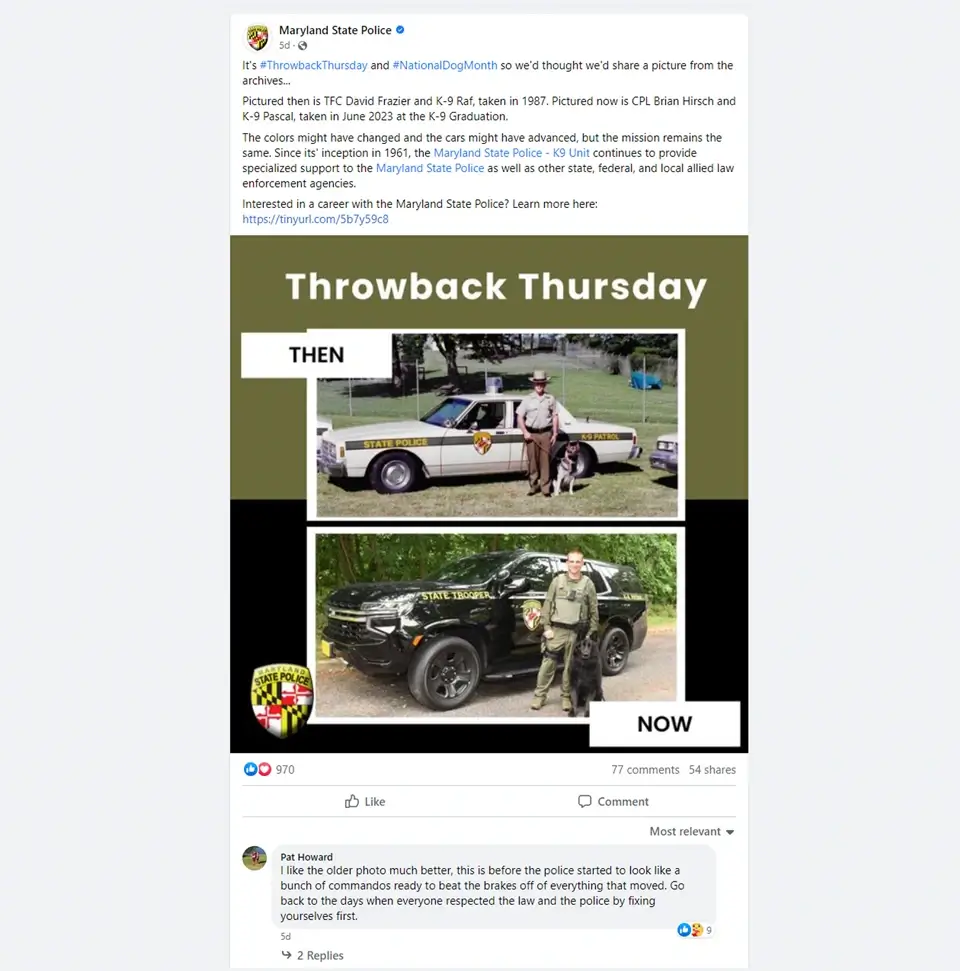
Check out this post from the Maryland State Police showing off a bit of their history!

Maryland State Police Facebook post of a throwback to their K9 unit.

2. Customer Content

User-generated content, especially from satisfied customers, serves as social proof. By showcasing real experiences, you’re not only validating the quality of your service or product but also making your customers feel valued and heard.

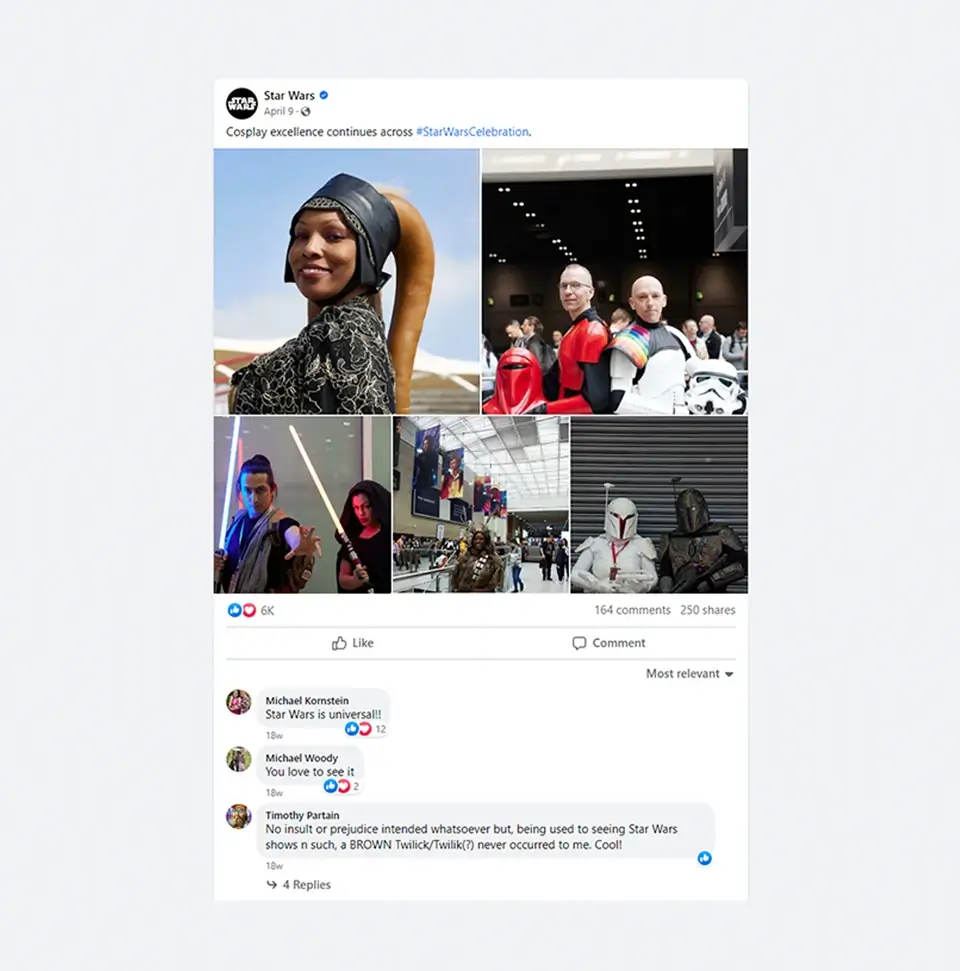
Star Wars shows off their dedicated fans who dress up as their beloved characters!

Star War show us cosplays on Facebook

3. Local Heroes

Highlighting local figures creates a sense of community and pride among your followers. It humanizes your brand by showing that you care about individuals and their contributions, rather than just sales or promotions.

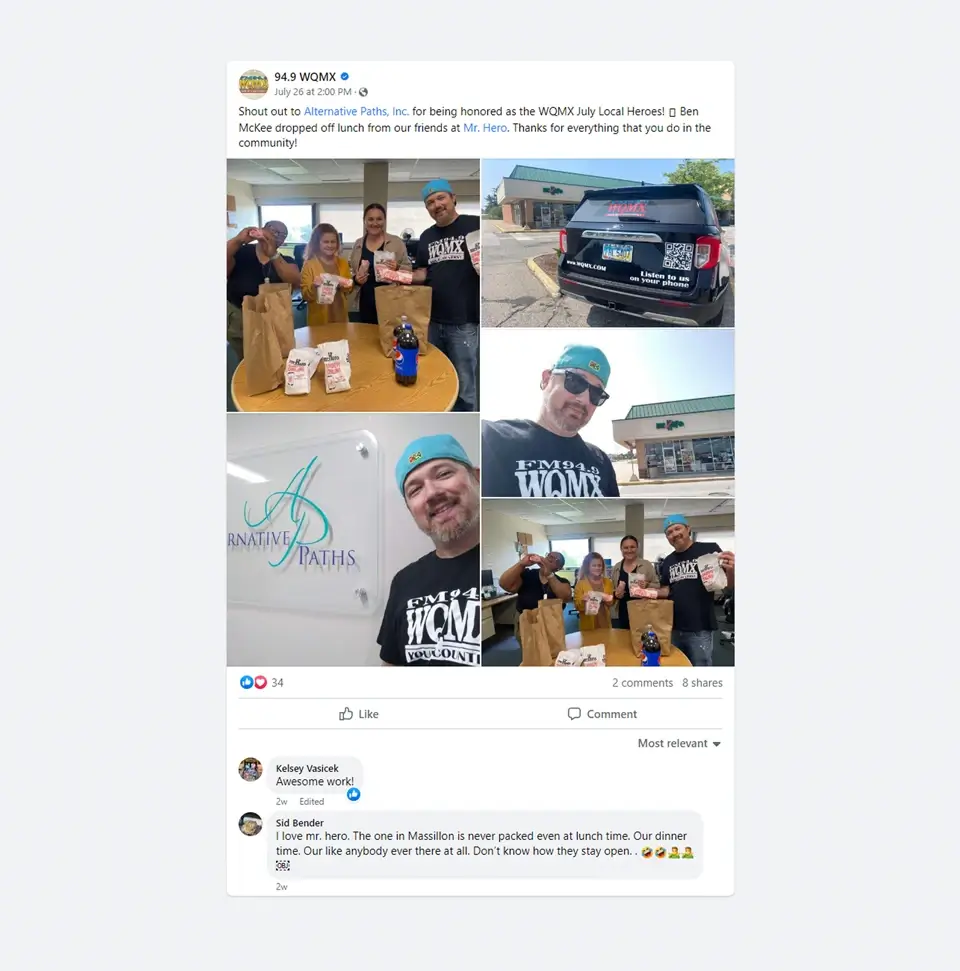
This Ohio-based radio station serves up free lunch from a local spot to those doing good work in their community!

94.9 Ohio Radio station promotes local heroes

4. Start A Conversation

Sometimes it’s as easy as commenting on the weather to grab your audience’s attention! This is a great and simple way to generate engagement when the conversation starter material is universal enough that anyone can participate.

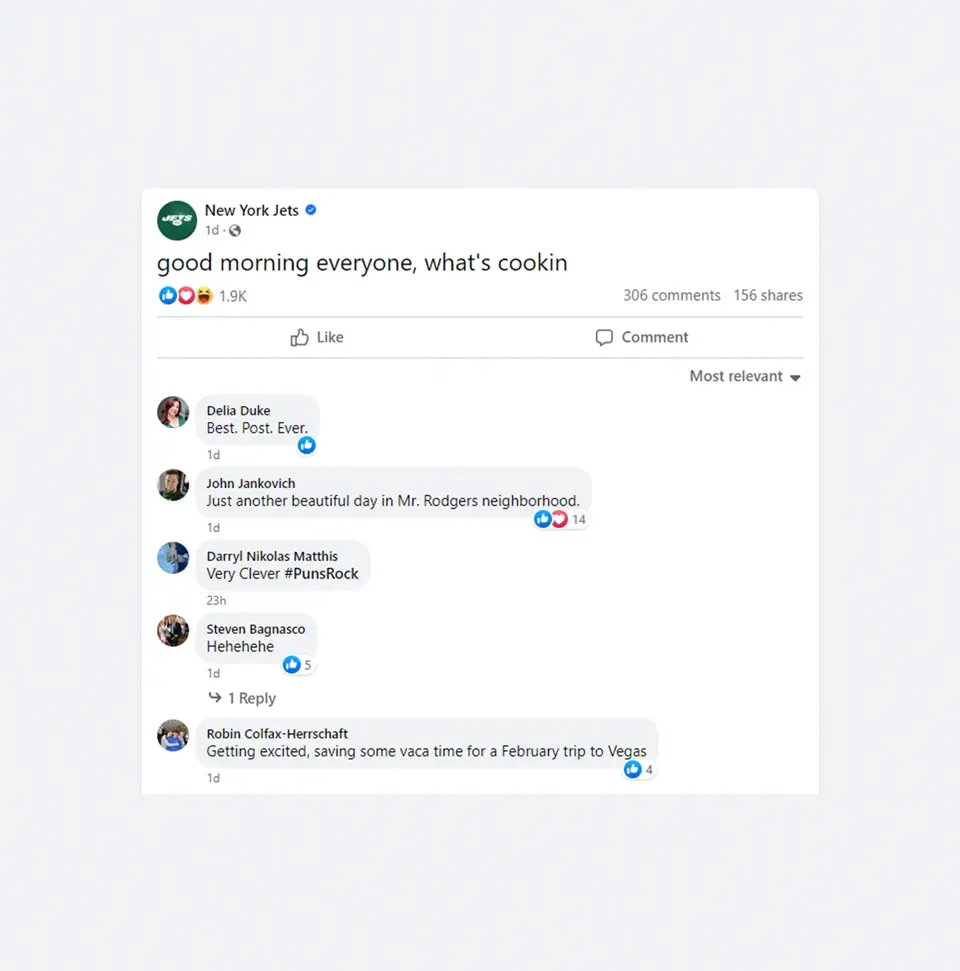
The New York Jets are just saying good morning and asking what’s up to their followers.

New York Jets start a conversation with their followers

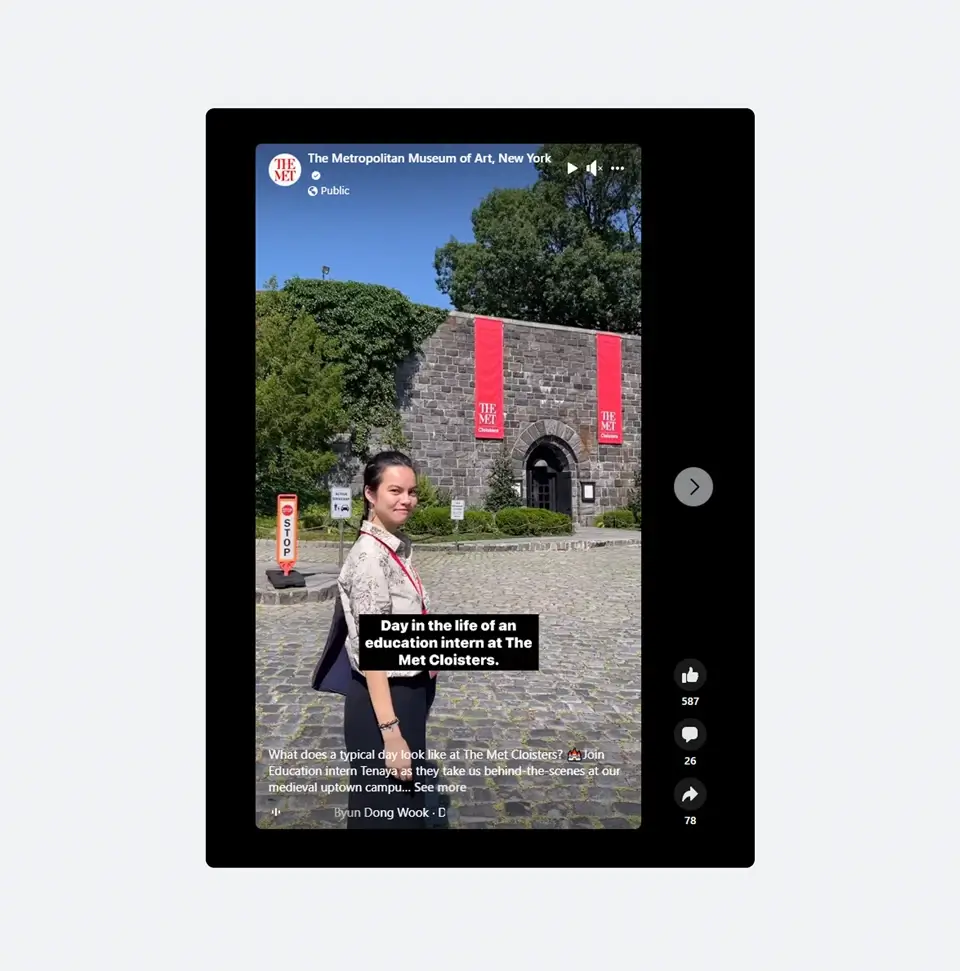
5. Behind-the-Scenes Tours

Such content demystifies your business process, making it more relatable. By offering transparency, you’re building trust and making followers feel like they’re a part of your journey, rather than just customers.

The Met shows behind the scene videos

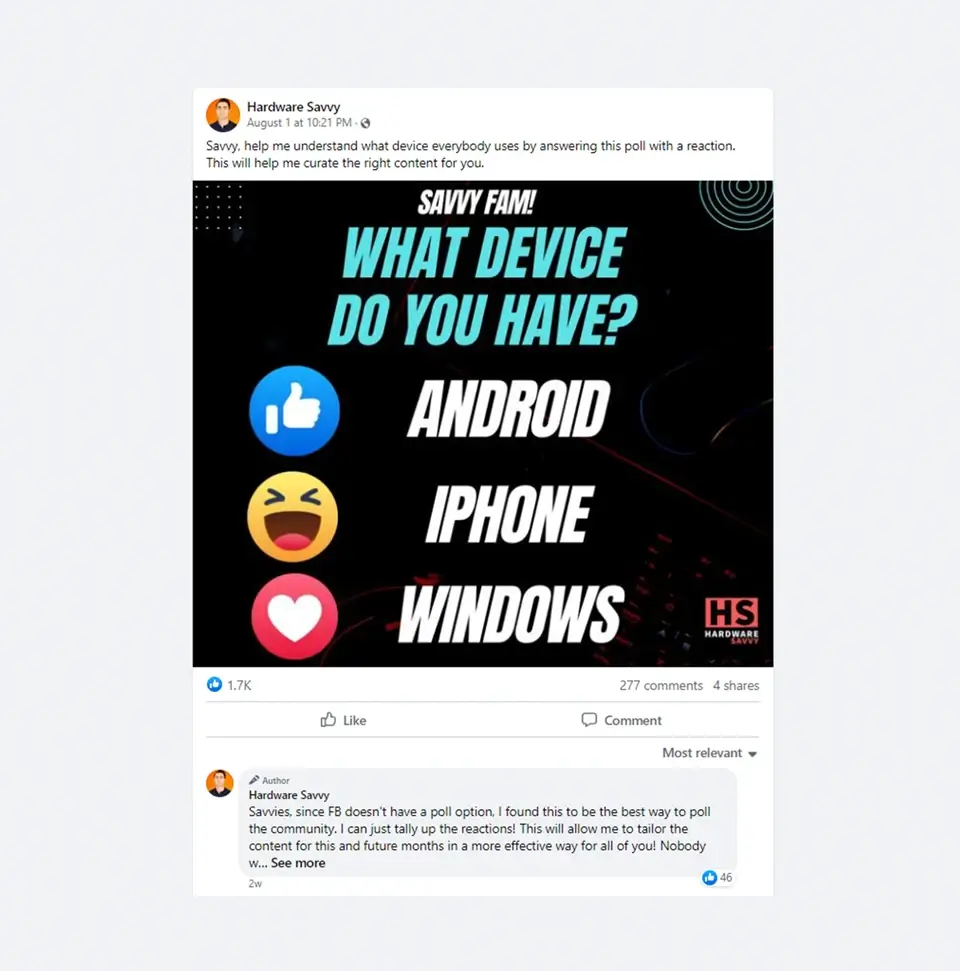
6. Social Surveys

Polls and surveys serve a dual purpose: they engage your audience by making them feel heard and provide you with valuable feedback. It’s a direct line of communication that can inform future business decisions!

This tech creator is polling his audience to further tailor his content to them, making this a great example of audience collaboration.

Hardware Savvy gives social survey

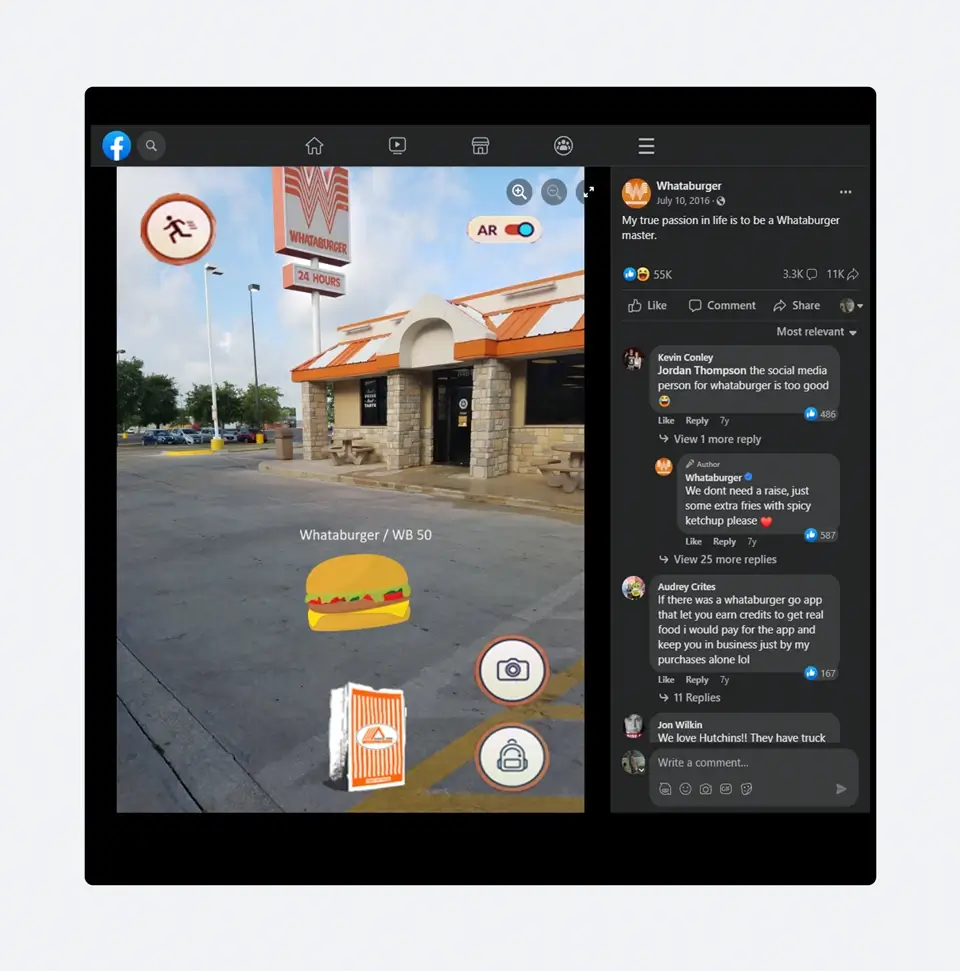
7. Trending Topic Tie-ins

By connecting your posts with current events or pop culture, you’re showing that your brand is up-to-date and relevant. This can increase shareability as the content is timely and resonates with what’s currently on people’s minds. It also allows you to quickly engage a large portion of your audience without much effort!

Back when everyone was outside hunting for AR creatures in Pokemon Go, Whataburger got in on the trend with their hilarious and viral take.

Wataburger takes trending topics into Facebook post

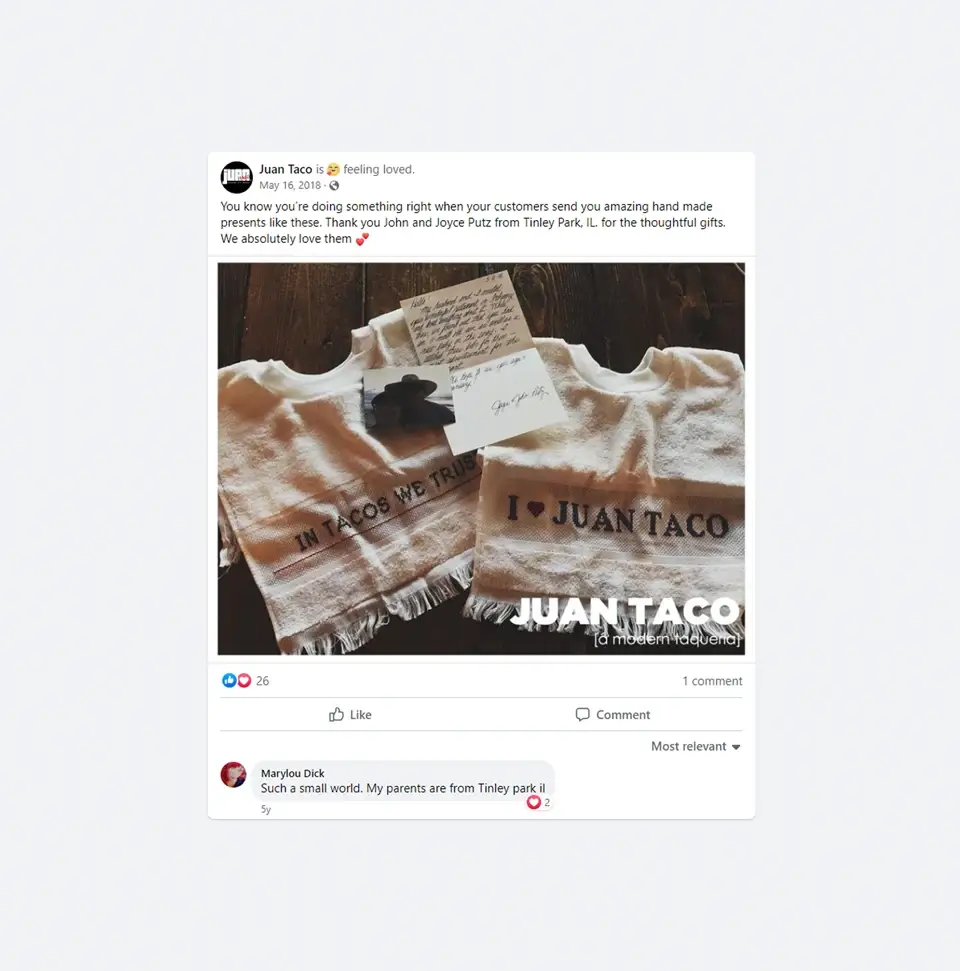
8. Customer Testimonials

Positive feedback from real customers can be more convincing than any advertisement. Showcasing these testimonials reinforces the quality and reliability of your offerings, influencing potential customers’ decisions.

Juan Taco shows that customer testimonials can go beyond the review, with this heartfelt gift from some appreciative customers

Juan Taco showcases a customer testimonial

9. Collaborative Campaigns

Joint promotions can tap into new audience segments and bring fresh perspectives. By collaborating, you’re also fostering community relationships and providing diverse content to your followers.

Brain & Spine uses collaboration to do good for senior residents with Alzheimer’s in their local community during the holiday season.

Brain and Spine collaborates with local community events

10. Tips & Tricks

Sharing useful tips and tricks related to your products or industry establishes your brand as a valuable resource. By offering shortcuts or insights that make customers’ lives easier or experiences better, you create a community of informed and loyal followers who appreciate the added value you provide.

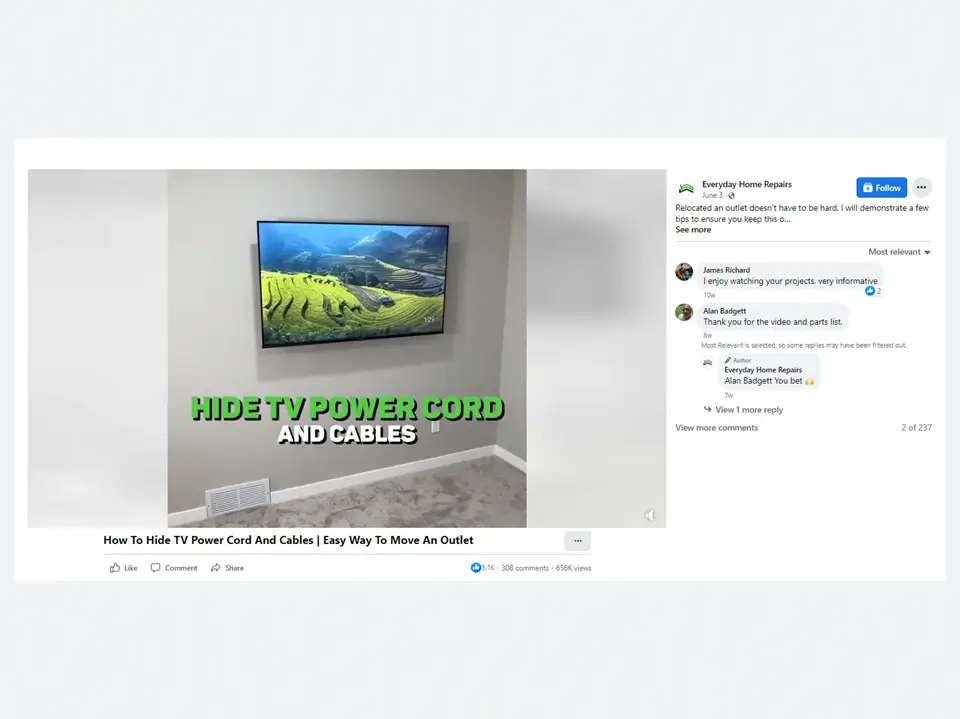
Showing off how to do simple fixes, like hiding annoying cables on your TV system is useful to his audience, and creates great engagement for him as a creator.

Everyday Home Repairs gives tips and tricks

Harnessing Facebook’s Potential for Your Business

Facebook provides a plethora of opportunities for brands to connect in creative and compelling ways. From playful interactive posts to weekly specials and pet features, the sky’s the limit. Dive in, experiment, and see how your online presence flourishes.

If you’re looking for assistance in enhancing your social media game, don’t hesitate to reach out! We’re here to help elevate your brand’s digital voice.

Drive Customer Engagement with This Simple Google My Business Optimization Checklist

In the maze of digital platforms and reputation management tools available to businesses today, Google My Business (GMB) stands tall as a beacon for local enterprises. Let’s journey through the ins and outs of this invaluable tool, delving into its nuances and exploring its unmatched advantages in managing and enhancing your business reputation.

Unveiling Google My Business (GMB)

An Overview of GMB

GMB is not just another digital tool; it’s Google’s gift to businesses. Designed as a free, user-friendly tool, it allows businesses, both big and small, to craft and control their online identity directly on Google. It’s like an online business card that’s accessible to everyone at all times.

Why Every Business Should Care About GMB

Modern consumers, armed with smartphones, make decisions on the go. Whether looking for a local cafe or a niche bookstore, they rely heavily on online searches. GMB listings pop up with key details about businesses, making it a primary source of first impressions. From hours of operation to customer reviews, GMB provides quick, at-a-glance information that can make or break a consumer’s decision to engage with your business.

Your Step-by-Step Guide to Mastering GMB

The road to a perfect GMB listing is paved with attention to detail and regular updates. Here’s your map:

Claiming and Creating Your Space

Before you even begin to decorate your digital storefront, you need to own it. Search for your business on Google. If it doesn’t appear, you’re starting with a blank canvas—create a new listing. If your business pops up but remains unclaimed, it’s like a store without a manager. Take charge, and claim it.

The Importance of Verification

Verification is akin to getting a seal of authenticity. Google employs various verification methods to ensure that businesses are legitimate. Once you verify your business, it not only elevates your credibility but also increases your chances of appearing in local searches.

Crafting Your Business Narrative

An empty store won’t attract customers. Fill in every detail on your GMB profile. From your story to your services, let visitors know what you offer, why you’re unique, and how you can cater to their needs.

Capturing Engagement Through Multimedia

A picture speaks a thousand words, and in the digital world, it can be the difference between a scroll-by and a click. Showcase your business’s ambiance, products, events, and even happy customers. Diverse and high-quality visuals make your listing more engaging and can significantly elevate a visitor’s experience.

Navigating Google Business Insights

Imagine having a bird’s-eye view of how customers perceive and interact with your business. Google Business Insights offers this perspective. From tracking how customers find your business to observing their interaction patterns, this data is gold. Regularly revisiting and analyzing these insights can fine-tune your marketing and operational strategies.

The Art and Science of Reviews

Reviews are the modern word-of-mouth. Actively encourage satisfied customers to leave positive feedback. However, it’s equally crucial to address and respond to negative reviews constructively. Demonstrating responsiveness and a willingness to improve can convert a disgruntled customer into a loyal one.

Wondering how to get more Google reviews? Check out our nifty Guide on Strategically Gathering More Reviews!

Navigating Challenges and Pitfalls with GMB

Like any digital tool, GMB isn’t without its quirks. Let’s address some common challenges:

The Vanishing Act: Business Not Showing Up

It’s every business owner’s nightmare—your business simply isn’t appearing on Google. Before hitting the panic button, run through a checklist: Is your listing verified? Is your information accurate and updated? Does it adhere to Google’s guidelines?

Interpreting GMB Scores

Google My Business (GMB) scores offer a comprehensive view of your online performance, encompassing user reviews, engagement metrics, and profile completeness. A high score is achieved through consistently positive reviews, high user engagement with your listing, and a complete, up-to-date business profile. To enhance your GMB score, encourage satisfied customers to provide feedback, regularly update visuals, ensure your profile remains current, and engage directly with users using features like Q&A and Google Posts.

The Power of Professional GMB Optimization Services

Navigating the complexities of Google My Business can often be overwhelming. Given the rapid pace of evolving digital landscapes, it’s no surprise that businesses seek the guidance of seasoned professionals. We pride ourselves on our deep expertise in Google My Business. Through our tailored GMB optimization services, we ensure your business consistently radiates the best impression, primed to captivate and convert potential customers.

Consider your GMB listing as a steadfast beacon in the expansive digital sea. Armed with the insights and tactics discussed earlier, and reinforced by our proven expertise, your business is set to scale unprecedented digital peaks. Embrace the potential of GMB with us, and witness your brand’s transformative journey.

Ready to elevate your online reputation? Contact us today for our comprehensive reputation management services.

What is a CTA? Harnessing the Potential of CTAs in Marketing

In the vibrant realm of digital marketing, Calls to Action (CTAs) stand as compelling signposts guiding visitors towards meaningful interactions. These potent tools, often manifested as website buttons, play a crucial role in transforming passive browsing into action sales. But, what is a CTA, and how can we harness its potential to accelerate our marketing outcomes?

Breaking Down the Call to Action Meaning

CTA, or Call to Action, is a term often tossed around in marketing circles, but what does it really signify? Simply put, a CTA is a prompt or directive that encourages visitors to take specific actions. This could range from signing up for a newsletter, purchasing a product, or even following your brand on social media.

A well-crafted CTA is more than just a ‘click here’ button. It’s a strategic blend of button design, persuasive text, and placement that collectively work to guide the visitor toward a desired action, propelling your action advertising efforts.

The Art of Writing a Call to Action

CTAs should be loud and clear as a call to action – they should be easily noticeable, compelling, and guide visitors effortlessly toward the next step. Here’s how to go about writing a call to action that works:

Be Clear and Direct

CTA digital directives should be straightforward and tell visitors exactly what to do. For instance, phrases like “Buy Now,” “Sign Up,” or “Learn More” are simple yet effective. Making the mistake of having your audience try and guess too much may lead to them not taking action.

Leverage Action-Packed Language

It’s important to use dynamic language that inspires action. Incorporate strong command verbs and create a sense of urgency to compel your visitors to act, like “Get Started Today” or “Buy Now.”

Make it Personal

Personalizing your CTAs can make your audience feel more connected. For example, instead of saying “Start Your Trial,” try “Start My Trial.” The more you can make your audience feel their role is important, the more likely they are to engage with your CTAs. Everyone likes to feel included!

Button Design: Making Your CTAs Stand Out

The design of your CTA button is just as important as its message. Here are a few tips to make your CTAs visually appealing:

Utilize Contrasting Colors

Your CTA should stand out from the rest of your website design. Using a contrasting color for your CTA button can help it catch the viewer’s attention.

Keep it Large but Appropriate

While your CTA button should be large enough to be noticeable, it should not overwhelm the rest of your page design. Maintain a balance that ensures visibility without causing a distraction, none of us miss the days of pop-ups covering our browser pages!

Employ Clear Fonts

Use a simple, easy-to-read font for your CTA. Remember, the goal is to make it as easy as possible for the viewer to understand what action they should take.

Call to Action Examples: Learning from the Best

To master the art of crafting compelling CTAs, it’s beneficial to learn from effective call to action examples. Consider the following:

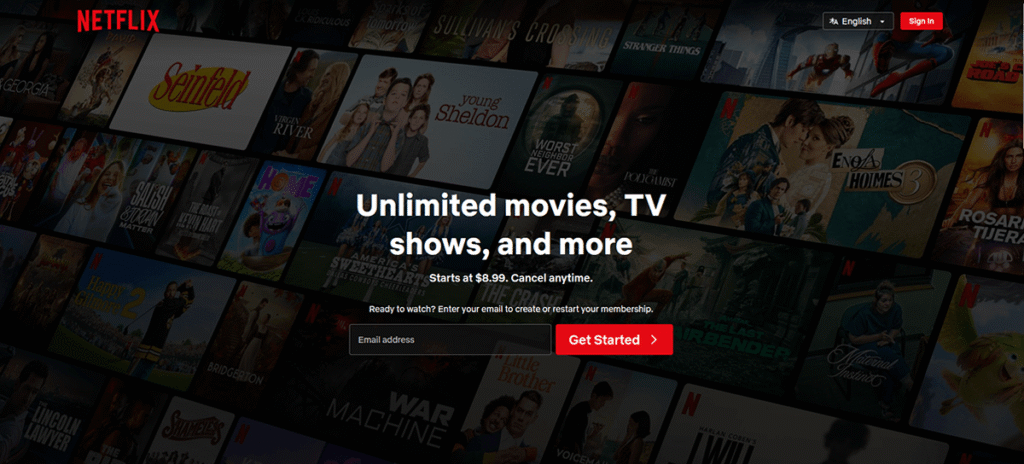
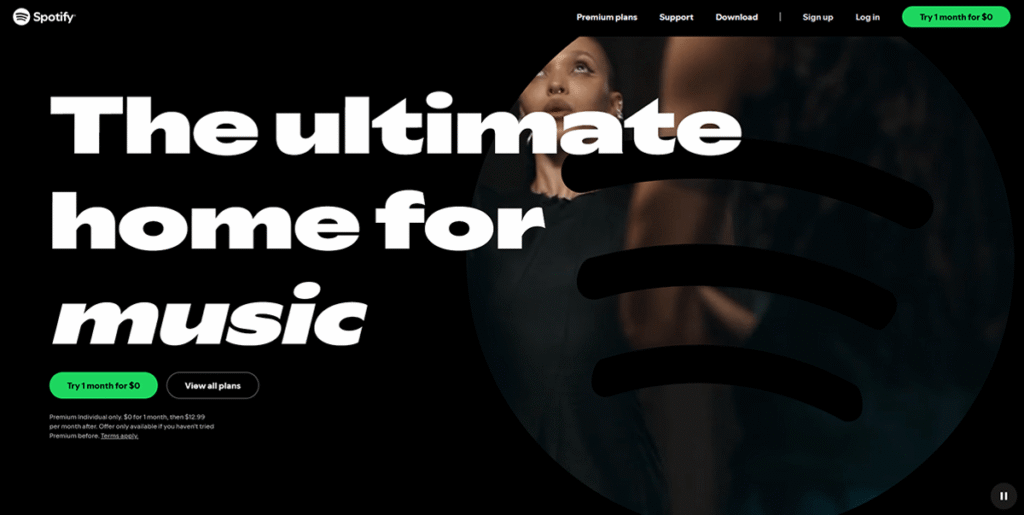
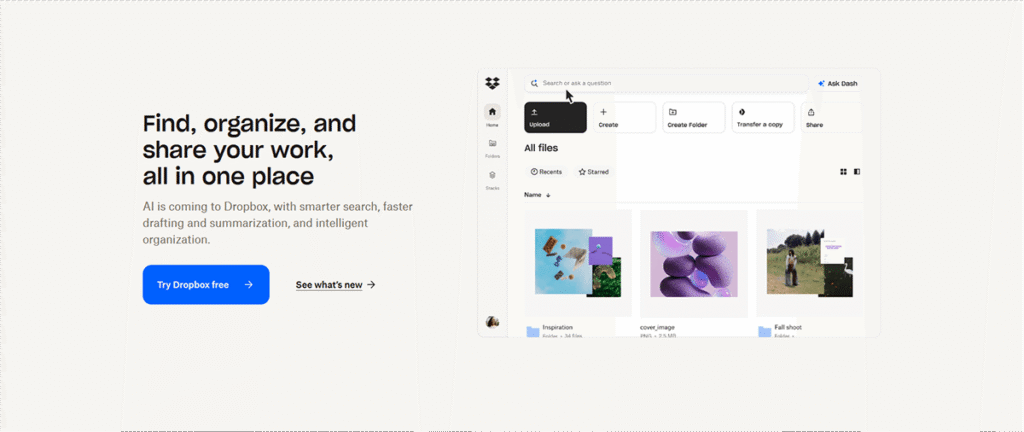
Netflix’s “Join Free for a Month.”

Spotify’s “Get Spotify Free.”

Dropbox’s “Sign up for free.”

Each of these CTAs is simple, direct, and creates a sense of no-risk involvement, increasing the likelihood of action.

Embracing the Call to Action in Modern Platforms: TikTok

CTAs have evolved with the digital landscape, finding their place in modern platforms like TikTok. A call to action TikTok might involve prompts like “Follow for More Tips” or “Like and Share if You Agree,” thereby increasing engagement and boosting reach. CTAs like this have moved beyond the bounds of traditional prompting like buttons, where these calls exist in descriptions or even at the end or beginning of the videos.

Harnessing the Potential of CTAs in Your Marketing Strategy

CTAs are a linchpin in any successful digital marketing strategy. They provide clear direction, motivate immediate responses, and play a critical role in driving conversions. Remember, a well-crafted CTA resonates with your audience, encourages them to take the desired action, and brings you one step closer to your business goals.

50 Powerful CTA Phrases to Spark Your Creativity

  1. Sign Up Now
  2. Get Started Today
  3. Join Our Community
  4. Claim Your Free Trial
  5. Subscribe Now
  6. Explore More Here
  7. Buy Now
  8. Reserve Your Spot
  9. Get Your Free Quote
  10. Learn More Today
  11. Discover More
  12. Download Now
  13. Start My Free Trial
  14. Register Here
  15. Hurry, Limited Offer
  16. Save Your Spot Now
  17. Get Instant Access
  18. Boost Your [Benefit] Now
  19. Unleash Your Potential
  20. Secure Your [Product/Service]
  21. Yes, I Want [Benefit]
  22. Try It For Free
  23. Book Your Appointment
  24. Get Exclusive Access
  25. Don’t Miss Out
  26. Start Your Journey
  27. Elevate Your [Benefit]
  28. Become a VIP
  29. Get My Discount
  30. Order Now
  31. Be the First to Know
  32. Act Now
  33. Upgrade Now
  34. Start Saving Today
  35. Begin Your Free Trial
  36. Double Your [Benefit]
  37. Unlock Your [Benefit]
  38. Take the Quiz
  39. Gain Instant Access
  40. Join Free for a Month
  41. Connect Now
  42. Claim Your Spot
  43. Secure Your Deal
  44. Get It First
  45. Discover Your [Benefit]
  46. Access Now
  47. Transform Your [Benefit]
  48. Get Results Now
  49. See How Here
  50. Start Earning Now

Remember, the most powerful CTAs are tailored to your audience, your offer, and the context in which they appear. Test different CTAs to find out which work best for your business!
Still got questions on CTAs and how you should leverage them? Give us a shout! We’re your secret weapon to success.

How to Get Google Reviews and Why It Matters For Your Business

In our ever-growing digital age, customer reviews are the driving force behind any successful business. Among these, Google reviews hold significant weightage, impacting your online visibility, customer trust, and business growth. Navigating through the path of garnering Google reviews is an art, a strategy that, when mastered, bolsters your business reputation, propelling it towards unprecedented success. Let’s delve into the undeniable value of 5-star Google reviews and reveal the techniques to attract them effectively.

Understanding the Power of Google Reviews

The Dual Impact of a 5-Star Google Review and SEO

When customers perform a Google reviews search, they’re instinctively drawn to businesses flaunting high ratings. A 5-star Google review not only boosts your business’s credibility but also establishes it as a trusted choice among potential customers.
Google reviews also wield considerable influence over SEO. The algorithm views positive and consistent reviews as a signal of your business’s reliability, potentially improving your search engine ranking and making you more visible to a wider audience. The more your clients are happy and let you know it, the higher you’ll go above your competitors.

Strategically Gathering Google Reviews

Understanding the significance of Google reviews is a breakthrough moment in your digital marketing journey – hooray! However, this knowledge alone won’t drive the desired results. It’s akin to knowing the importance of a destination but lacking the route to reach it. The next crucial phase of this journey is to equip yourself with effective and efficient strategies for garnering Google reviews. This involves designing approaches that not only encourage your customers to share their experiences but also make the review process seamless for them.

Seamless Review Submission with Google Reviews Link and QR Codes

Make the review process hassle-free for your customers by creating a direct Google reviews link to your review page. Share this link via email, social media, or embed it on your website to encourage more responses. In the era of swift digital interactions, consider generating a Google review QR code. Customers can scan this code and be directed instantly to your review page – an embodiment of fast easy reviews.

The Power of Review Cards and Prompt Requests

Another effective tool to getting those sought-after Google reviews are review cards, physical or digital reminders containing a link to your review page. These could be a QR code on your business card, or specific review card reminders that are passed along to customers at the end of service. These are particularly beneficial for businesses with a physical presence where customers can scan the card while still on your premises.
And, of course, there’s power in simply asking. Make it a habit to request your customers to review you on Google. The more feedback you receive, the more data you have to improve your business and gauge customer sentiment.

Authenticity over Paid Google Reviews

While it’s important to gather as many reviews as possible, beware of the temptation to buy Google reviews. These paid Google reviews not only harm your reputation but violate Google’s policies, potentially leading to penalties. Violating this can not only result in the removal of those reviews entirely, but Google will also likely add a strike to your account. When you have too many strikes against your listing for violating policies, your listing will be permanently removed from Google, removing your ability to rank on that local level at all. Strive for authenticity and genuine customer feedback to maintain trust and build a loyal customer base.

Looking for ways to improve your Google Business Profile’s visibility? Check out our Simple Google My Business Optimization Checklist

Monitor and Leverage Your Google Reviews

Keeping a close eye on your Google reviews is crucial for effectively managing your online reputation. To access these reviews, a simple search of your business name on Google will lead you to your business profile, where they reside.
Responding to reviews, both positive and negative, should be a non-negotiable aspect of your review management strategy. When faced with unfavorable reviews, it’s essential to navigate these waters with grace and professionalism. It’s easy to become defensive, especially when it appears the reviewer may not have considered your perspective, but remember: your responses are public and are read by potential customers.
In responding to negative feedback, demonstrate your commitment to service excellence by offering amends and expressing apologies to those who felt wronged. Try to steer clear of protracted disagreements in the review section; the goal should be to emerge as the more understanding and respectful party. Potential customers will appreciate your efforts to rectify the situation, which often speaks louder than the negative review itself! This showcases your business’s dedication to customer satisfaction, which can significantly influence their decision to choose your services.

Seizing the Google Review Advantage

Google reviews are more than just customer opinions – they’re tools that can drastically boost your business’s online reputation and growth. By making strategic efforts to gather these reviews and responding proactively, you can position your business at the forefront of customer trust.
So, don’t wait – dive in, explore the world of Google reviews, and give your business the push it needs. If you find yourself needing further guidance on harnessing this power of Google reviews, give us a shout! We are your team of experts for your reputation management. We’ve got the skills and know-how to make your listing soar high.

How to Create Effective, Personalized Marketing Experiences (Without Being Creepy)

In the modern era of data-driven marketing, crafting personalized marketing experiences that resonate with your audience without overstepping privacy boundaries has become a crucial challenge. As marketers, we’ve all seen the power of content personalization and hyper personalization in capturing audience attention and fostering engagement.

Leveraging Personalization Tools to Understand Your Audience

The first step to creating effective personalized content is understanding your audience. Personalization tools can be leveraged to gain valuable insights into your customers’ behaviors and preferences, allowing you to tailor your messaging to resonate with each unique individual. Whether it’s segmenting your audience based on shared characteristics, tracking their behavior to understand their preferences, or leveraging AI algorithms to predict future trends, these tools can be game-changers in the realm of personalized marketing.

Applying Advanced Advertising Tactics for Personalized Marketing Experiences

With a good grasp of your audience, it’s time to apply advanced advertising tactics. These tactics leverage various data points to deliver a truly personalized marketing experience. Geofencing targeting can make your messaging more relevant to consumers based on their physical location. Addressable advertising allows for personalized ads to be delivered across multiple devices, enhancing ad relevance. IP targeting and keyword targeting make your messaging highly specific, and site retargeting helps keep your brand top of mind for consumers who’ve shown interest in your offerings. Category contextual targeting ensures your ads reach audiences on websites or web pages relevant to your products or services, thus reaching a more interested audience.

Balancing Data Targeting with Privacy in Personalized Marketing

An integral part of creating personalized marketing experiences is data targeting. This involves using real-time data, such as browsing behavior and purchase history, to deliver highly relevant marketing messages. However, striking a balance between personalization and privacy is vital. Always be transparent about how you collect and use data, give users control over their information, and never sacrifice trust for personalization.

Crafting Eye-Catching, Personalized Ad Designs

With the right blend of these techniques, creating personalized ad designs becomes an exciting endeavor. You can craft ads that not only catch the eye but also speak directly to the viewer’s preferences and needs. Whether it’s using color schemes that resonate with your audience, integrating personalized messages, or optimizing ad layouts for different platforms, the opportunities are endless in creating ads that truly stand out.

Ready to Elevate Your Personalized Marketing Strategy?

We understand the intricacies of personalized marketing, along with the expertise to implement a range of advanced advertising tactics effectively, ensuring your marketing efforts hit the mark every time. We’re here to guide you in delivering personalized marketing experiences that respect customer privacy and genuinely resonate with your audience. Ready to get started? Contact us today to explore how we can help you enhance your personalized marketing strategy.

Critical Website Maintenance Tasks That Your Business Can’t Afford to Ignore

As a business owner, you are fully aware that a website is not a set-it-and-forget-it tool. To make it work in your favor, consistent website maintenance is crucial. So, what is website maintenance, and why is it so important? Let’s delve into this essential component of a successful online presence.

What is Website Maintenance?

Website maintenance involves a series of ongoing tasks to ensure your website runs smoothly, securely, and efficiently. It’s about updating your website’s content, fixing bugs, optimizing performance, and enhancing the overall user experience. Think of it as a regular check-up for your site that keeps it healthy and fully functional.

Why Do You Need a Website Maintenance Plan?

Having a well-planned website maintenance plan can help you prevent many problems before they occur. Imagine running a physical store; you wouldn’t want your lights to be out, dust gathering on your products, or your entrance door stuck, right? The same principle applies to your digital storefront—your website.

7 Key Website Maintenance Tasks Your Business Shouldn’t Ignore

1. Regular Content Updates

An active website draws both visitors and search engines. Frequent website updates with new blog posts, company news, or product launches keep your audience engaged and informed. This consistency not only improves your SEO but also enhances your brand image and authority.

2. Security Checks

Regularly updating your website’s software and plugins and conducting security scans can protect your site from potential cyber-attacks. Neglecting this can expose your website to threats, leading to data breaches or even downtime.

3. Website Optimization

Utilizing optimization techniques to enhance your website’s speed and performance is vital. A slow-loading website can turn away visitors and negatively impact your search engine rankings. Regularly optimizing your images, clearing your database, and checking your site’s loading speed can significantly improve user experience.

4. SEO Updates

SEO isn’t a one-time task; it needs consistent effort. Regularly reviewing and updating your SEO strategies—keywords, meta tags, and descriptions—will help your website rank higher in search engine results.

5. Backup and Restoration

Regular backups are a crucial aspect of website maintenance. They ensure that in the event of any mishap, your website can be quickly restored without significant data loss.

6. Broken Links and Error Checks

Broken links or 404 errors negatively affect your site’s SEO and user experience. Regular checks for broken links and fixing them promptly should be a part of your website upkeep tasks.

7. Usability Testing

Regularly checking your website’s functionality—forms, checkout processes, links—is crucial. Usability testing helps identify any potential issues that can hinder your site’s performance.

Understanding Website Maintenance Costs

Website maintenance costs can vary based on the complexity and size of your website. But remember, considering it as an investment rather than a cost can help you see its value. Regular maintenance can save you from costly fixes down the line, protect your brand’s reputation, and enhance your website’s overall performance.

Let Professionals Handle Your Website Maintenance

Maintaining a website can be time-consuming and technically challenging. That’s where we come in. Our comprehensive website management services allow you to focus on your business while we take care of your website.

We offer a complete suite of website maintenance and website management tasks, ensuring your website stays secure, updated, and optimized. So if you’re ready to enhance your online presence, contact us today. We’re here to ensure your website functions at its best, so your business can too.

What is Experience Design and Why it Matters

As a business owner, it is increasingly important to ensure you are providing your customers with the best experience possible – from the moment they interact with your product or service all the way through to after-sales support. Having an understanding of what “experience design” is and how it can positively improve user experience should be a top priority for any serious entrepreneur. Experience design isn’t something new – in fact, it’s been around in some form since the 90s – but this underrated facet of UX has seen a huge surge among modern businesses due to its ability to refine customer interaction down to subtle micro-interactions that can make a dramatic impact on their overall opinion of your company. We will examine what experience design means and outline to you why it matters so much for your business!

What is Experience Design and Why Does it Matter for Your Business

When it comes to user experience design, it’s all about making sure your user has a good time. After all, user experience elements are the key to engaging customers and keeping them coming back for more. But how do you make sure every user has a positive experience on your website or app? That’s where a UX researcher comes in — they’ll analyze user flow and provide insights into user preferences so that you can create an environment tailored to their needs. Experience design is essential for any business looking to optimize performance and retain customers. Ultimately, if done right, crafting the perfect user experience can help you stay ahead of the competition.

The Benefits of a Thoughtful User Experience

Building a website with thoughtful user experience isn’t just good manners – it can do wonders for your business. Having a website designed considering people who use it makes all the difference in achieving website goals, no matter what they are: higher sales, more conversions, etc. Taking into account website users’ needs and expectations goes a long way in making website visits better. UX in web design ensures that website visitors feel comfortable navigating the website and find valuable information quickly so they can convert. Plus, optimizing user experience between website visits helps build long-term relationships with existing customers, increases loyalty, and thus provides more chances to boost sales. So, it seems having a thoughtful UX should be part of any website’s conversion strategy!

Tips for Improving Your User Experience Design

Enhancing user experience design is something every business should strive for. But how do you go about it? First and foremost, focus on the user experience elements, such as a user-friendly navigation system and visuals that draw your user in. Then you can look at optimizing the functionality of the website—are there any broken links or errors that prevent a user from getting to where they need to be? Finally, think about the overall conversion strategy: are there sales pages or subscription forms users will have to use, and how comfortable do they feel interacting with them? All these components combined make up user experience design, so if you want an effective site, focus on making sure each one works well together.

How to Analyze and Monitor User Experiences

For business owners wondering how to analyze user experiences and monitor them for improvement, UX researchers are the key. Leveraging UX research as part of a continuous optimization cycle can increase conversion rates significantly since research provides insight into the experience your users have with your product or service. As UX researchers discover usability issues, they can then make suggestions for improving the user experience and implementing these ideas through conversion rate optimization best practices. With UX research incorporated into your process, user experiences will become more enjoyable — providing a better chance at developing lasting relationships with customers.

Final Thoughts on the Value and Impact of Experience Design

When it comes to user experience elements, creating a successful website experience can make or break a modern-day company’s conversion strategy. A positive user experience accounts for social media engagement, user friendliness, and customer loyalty. Experience design is not just about designing something visually appealing—it’s about making sure everything flows together in a way that helps those who interact with it succeed. Investing in user experience goes beyond aesthetics; its value and impact on the success of companies continues to grow with each passing day.

We’ve gone through a lot together, from learning what experience design is, to exploring the benefits and tips for improving it. Now that you know about the value and impact of experience design on your business, take action! Try incorporating some of these suggestions into your business practices. And if you’d like to take it one step further, enlist the help of our professional UX researchers at Curiosity Marketing Group. Whether you’re just beginning or refining existing user experiences, having an attentive partner will help you reach the next level of customer satisfaction and success!